AELIAVISION · JOURNAL
Ideas behind the images
Practical notes on cinematic storytelling, filmmaking, editing, and AI-assisted visual development.
-
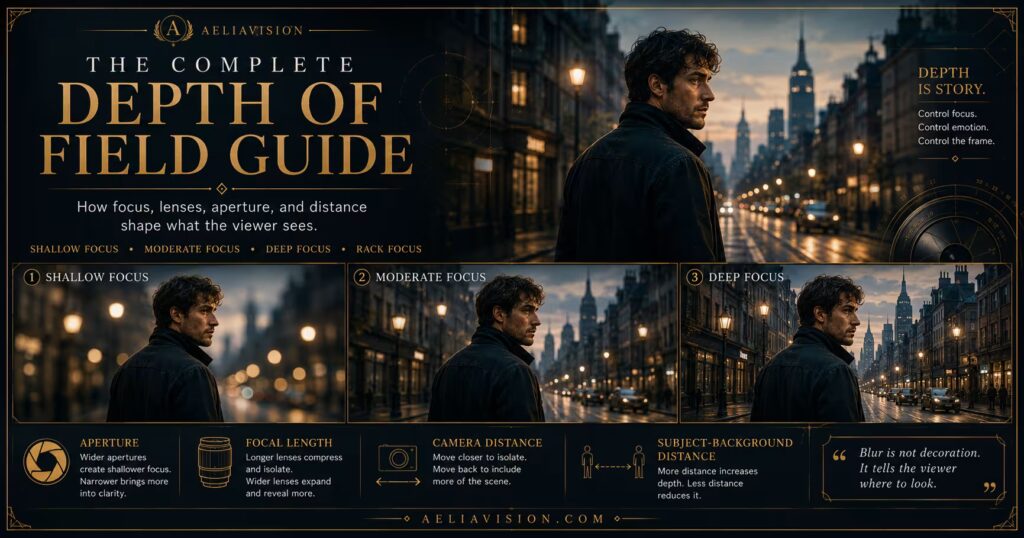
Depth of Field Guide: Using Focus to Control Attention in Film
Read article ↗: Depth of Field Guide: Using Focus to Control Attention in FilmDepth of field is the amount of a scene that appears acceptably sharp from front to back. A shallow depth of field keeps a narrow…
-
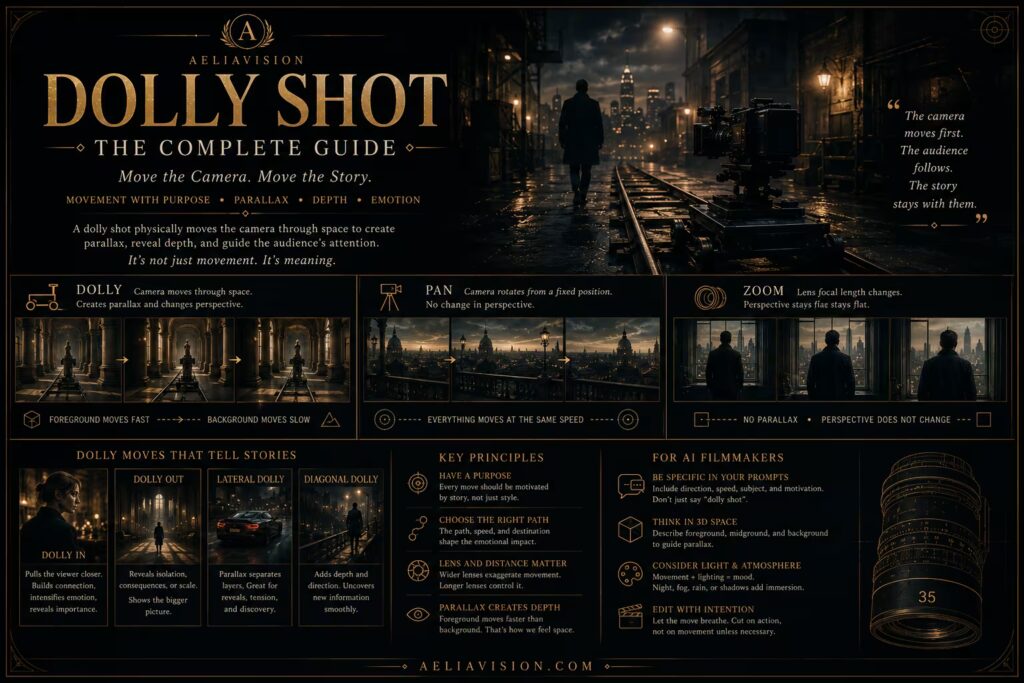
Dolly Shot Guide: How a Physical Camera Move Changes Space and Emotion
Read article ↗: Dolly Shot Guide: How a Physical Camera Move Changes Space and EmotionA dolly shot physically moves the camera through space, usually toward, away from, or alongside a subject. Unlike a zoom, this camera movement changes the…
-
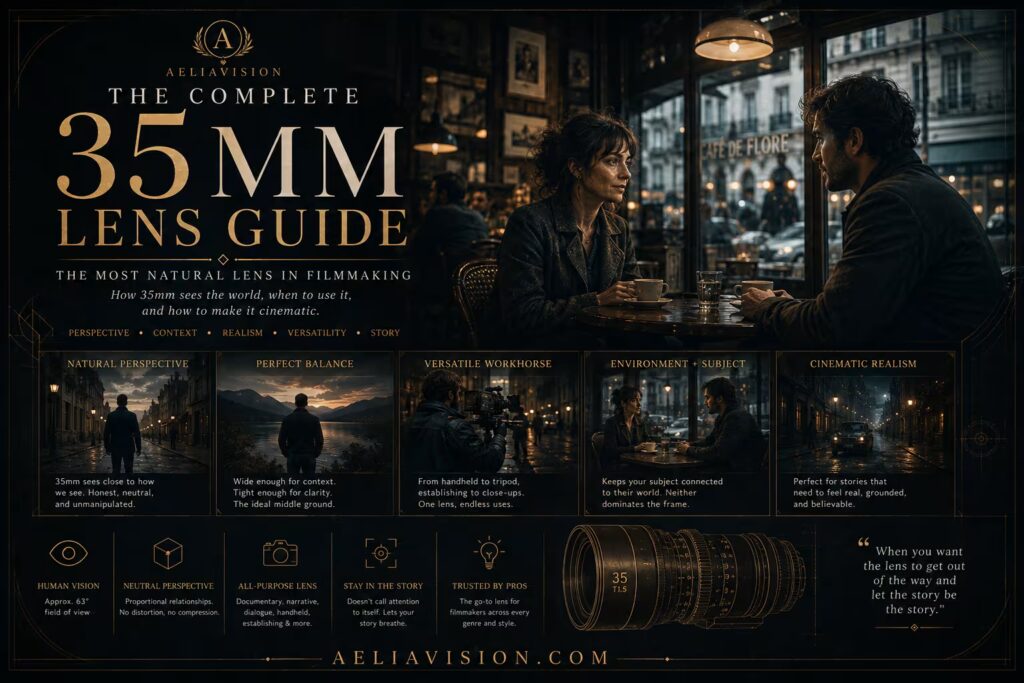
35mm Lens Guide: The Natural Perspective That Feels Like Human Vision
Read article ↗: 35mm Lens Guide: The Natural Perspective That Feels Like Human VisionLearn how a 35mm lens balances subject and environment, how camera distance changes perspective, and how to use it in filmmaking and AI prompts.
-
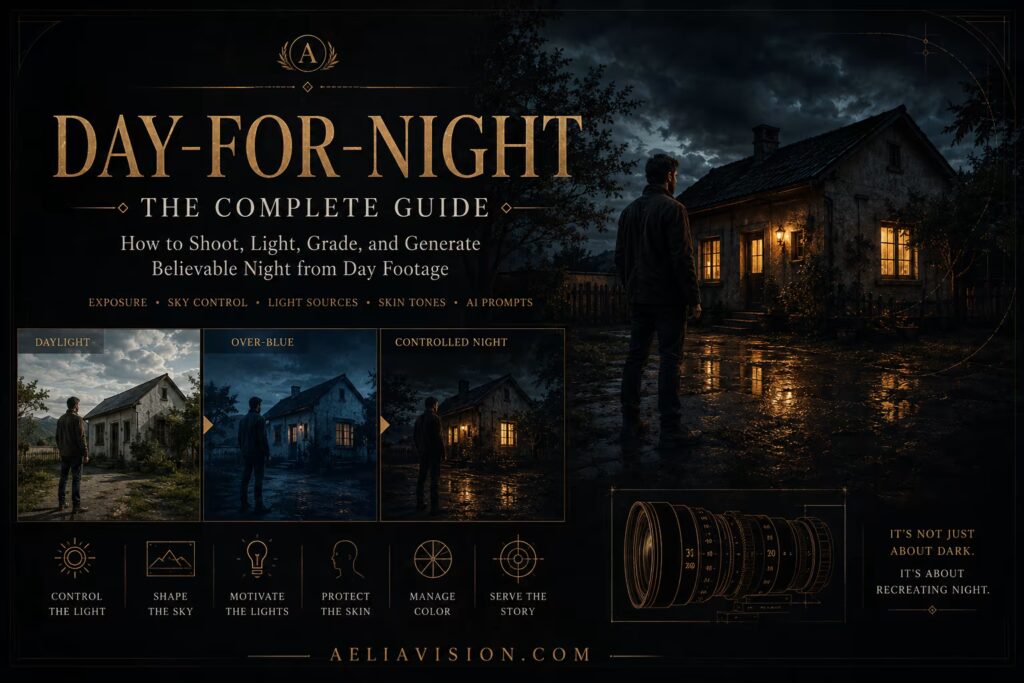
Day-for-Night Color Grading: Creating a Believable Night Scene From Daylight Footage
Read article ↗: Day-for-Night Color Grading: Creating a Believable Night Scene From Daylight FootageDay-for-night is the process of making footage shot in daylight appear to take place at night. It can be done through careful planning on set,…
-
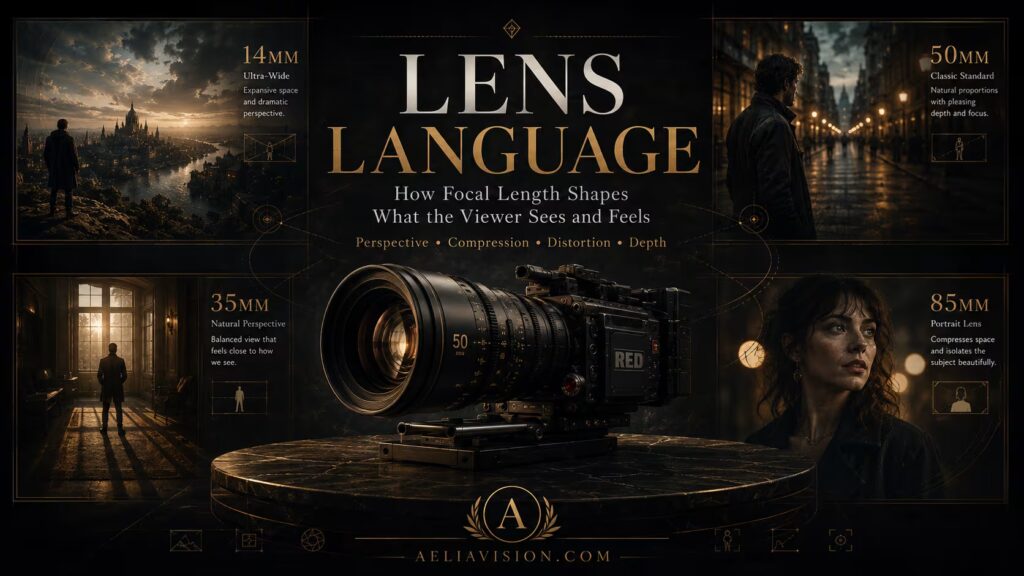
Lens Language: How Focal Length Shapes What the Viewer Sees and Feels
Read article ↗: Lens Language: How Focal Length Shapes What the Viewer Sees and FeelsLearn how focal length, camera distance, and aperture shape perspective, compression, depth, and emotion in cinematography and AI filmmaking.
-
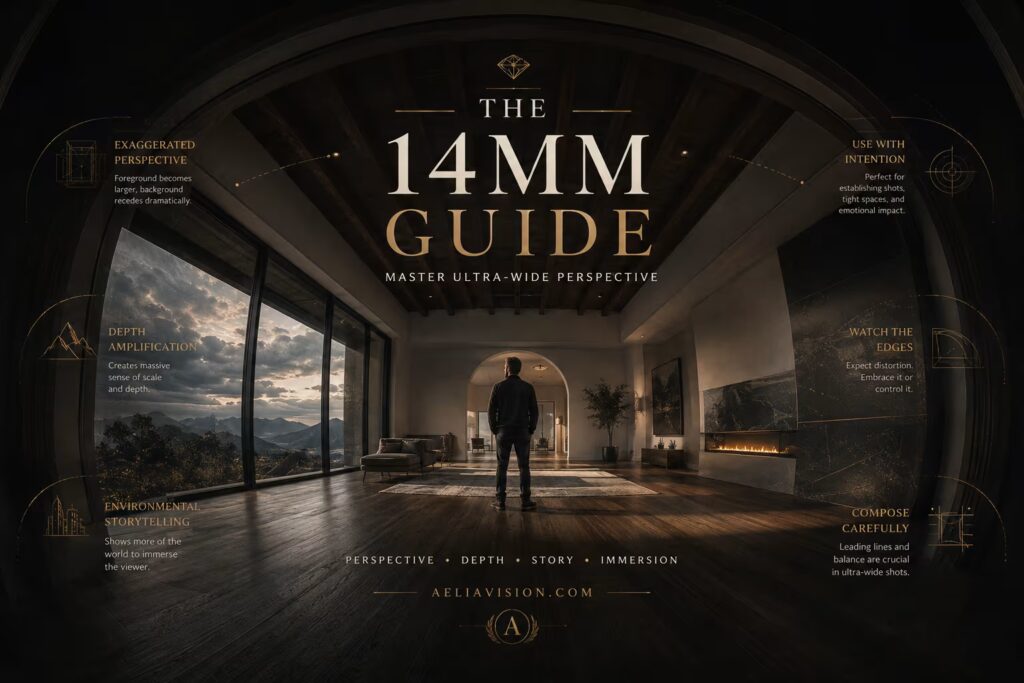
14mm Lens Guide: The Ultra-Wide That Bends Space and Reality
Read article ↗: 14mm Lens Guide: The Ultra-Wide That Bends Space and RealityLearn how a 14mm lens shapes field of view, edge stretching, depth, movement, and emotion, with practical cinematography and AI prompt examples.
-
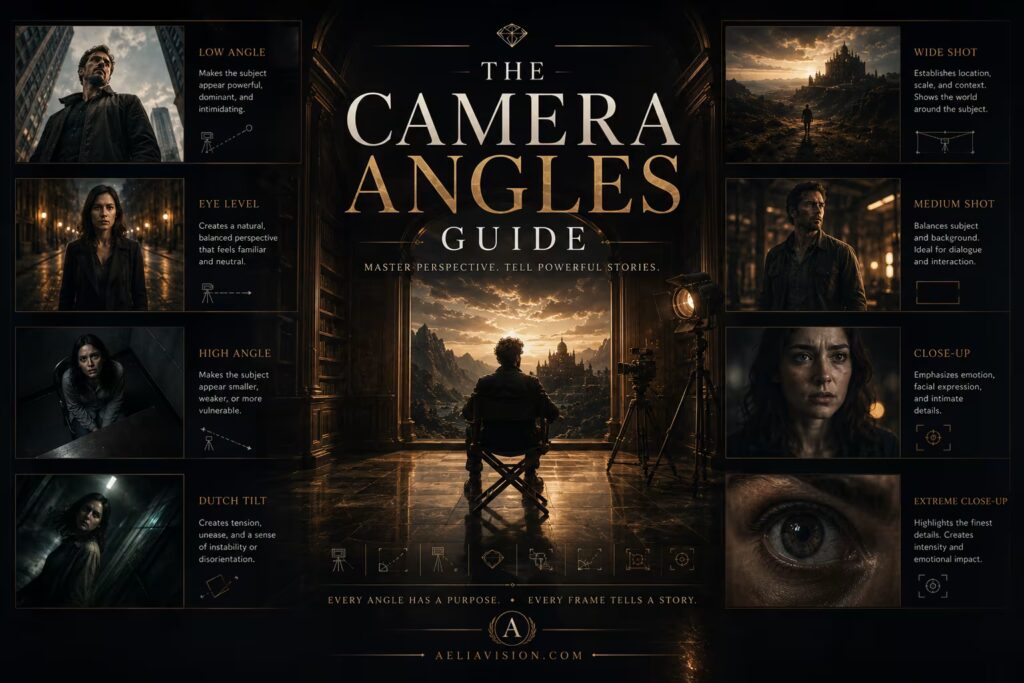
Camera Angles: How Different Positions Change What the Viewer Feels
Read article ↗: Camera Angles: How Different Positions Change What the Viewer FeelsLearn how camera angles shape power, vulnerability, tension, and intimacy, with practical shot choices and prompt language for AI filmmaking.
-
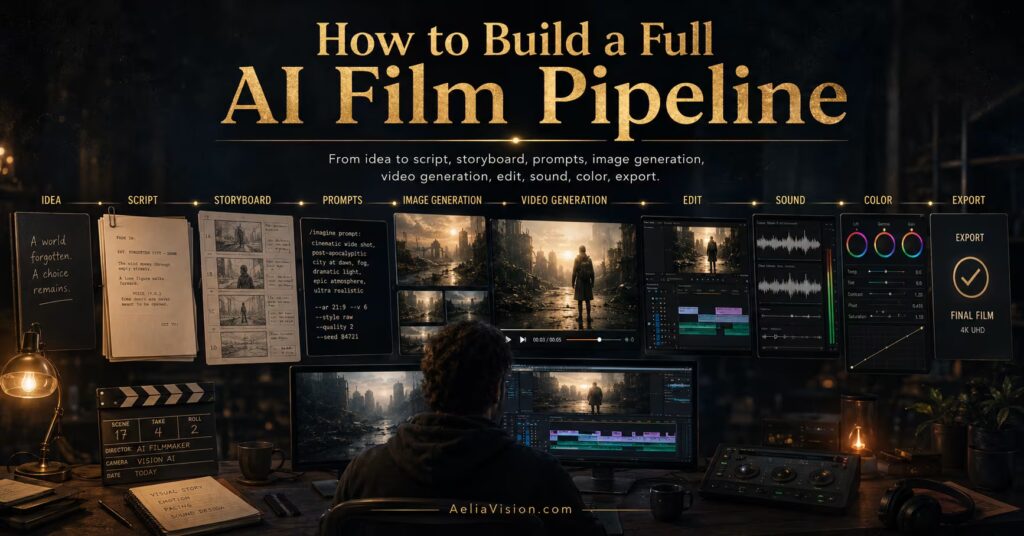
How to Build a Full AI Film Pipeline
Read article ↗: How to Build a Full AI Film PipelineBuild a complete AI film pipeline from story and shot planning through image and video generation, editing, sound, color grading, continuity, and export.
-
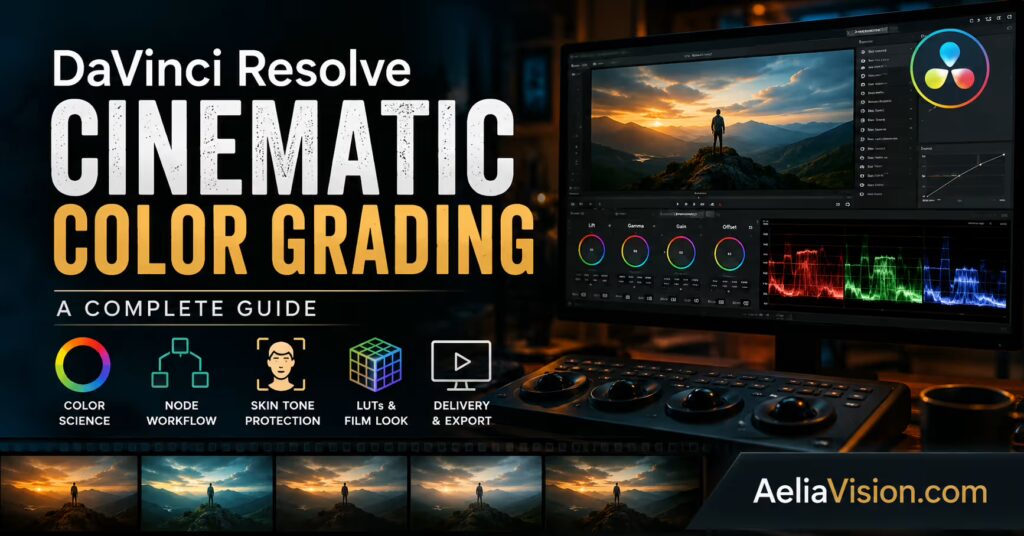
DaVinci Resolve Cinematic Color Grading
Read article ↗: DaVinci Resolve Cinematic Color GradingLearn DaVinci Resolve cinematic color grading with color management, node trees, scopes, skin-tone protection, film looks, shot matching, and delivery settings.
-
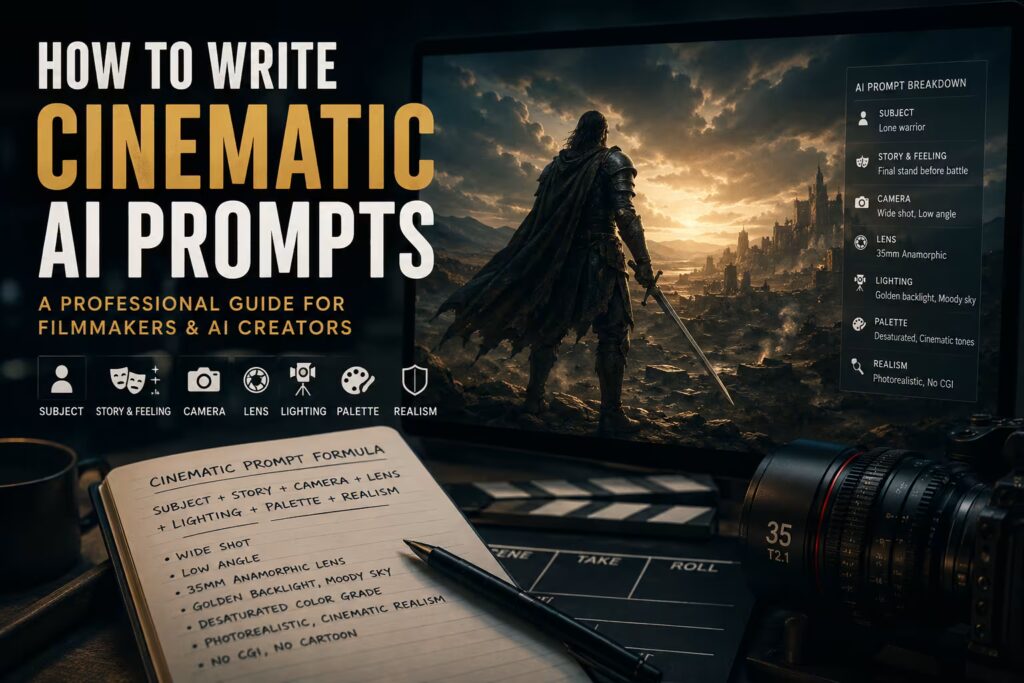
How to Write Cinematic AI Prompts
Read article ↗: How to Write Cinematic AI PromptsLearn how to write cinematic AI prompts using subject, story, camera angle, lens, lighting, color, realism, and negative constraints for images and video.
-
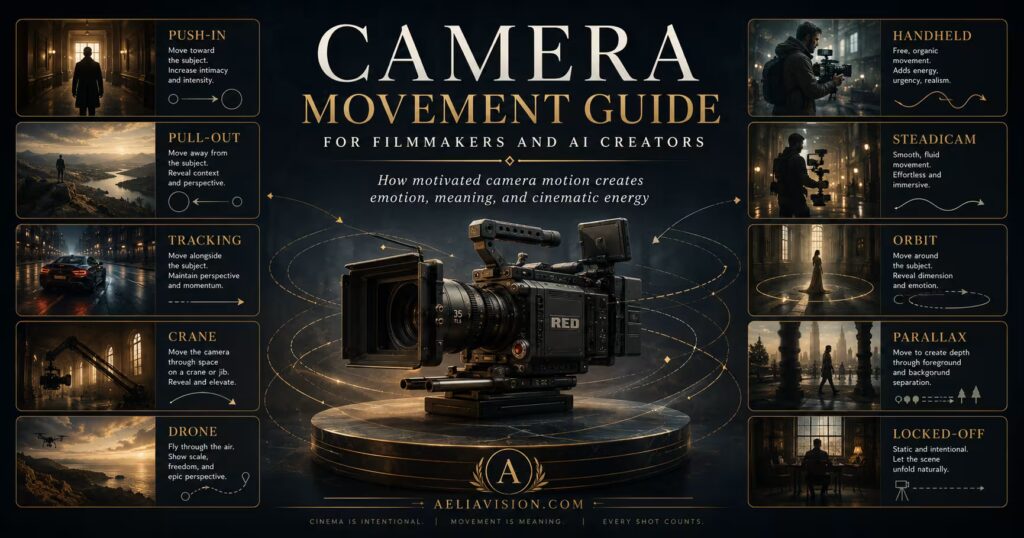
Camera Movement Guide
Read article ↗: Camera Movement GuideUse this camera movement guide to plan push-ins, tracking shots, pans, cranes, handheld work, dolly zooms, and motivated AI video prompts with continuity.
-
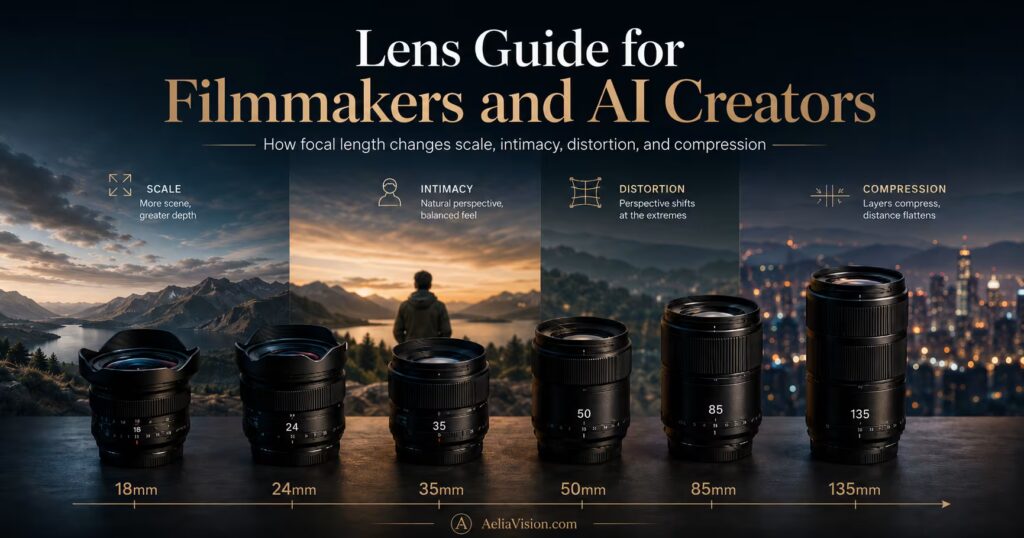
Lens Guide for Filmmakers and AI Creators
Read article ↗: Lens Guide for Filmmakers and AI CreatorsUse this lens guide for filmmakers and AI creators to choose focal lengths for scale, intimacy, distortion, compression, depth of field, and cinematic emotion.
Explore by topic
- AI Cinematic Creation Basics
- AI Filmmaking
- Camera Movement Library
- Cinematic Foundations
- Cinematic Visual Language
- Color Grading
- Commercial and Brand Film Production
- Common Mistakes and Fixes
- Downloads and Resources
- Genre Guides
- Lens Guide
- Production Pipeline
- Prompt Engineering
- Prompt Engineering for Cinema