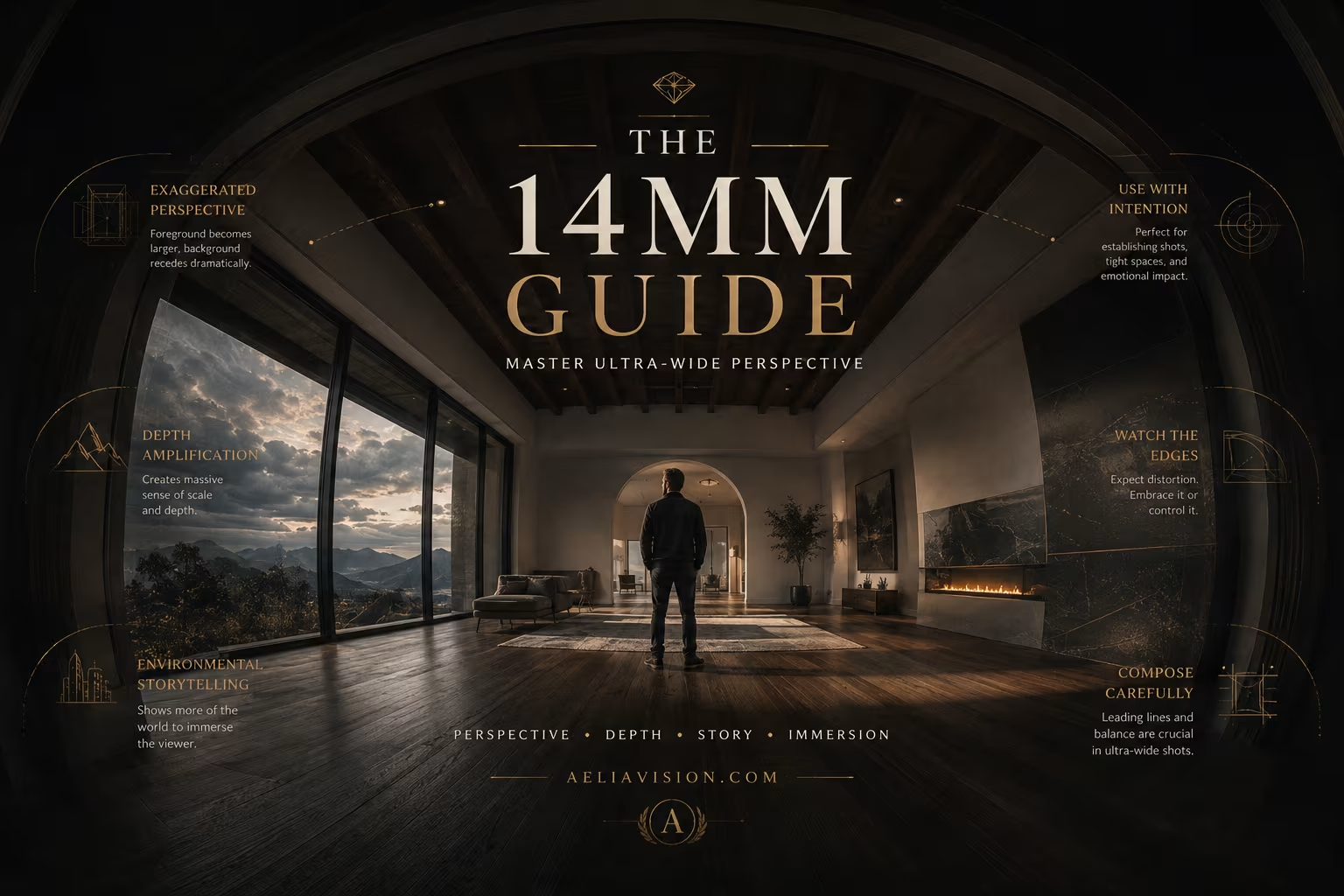
The story in brief
Learn how a 14mm lens shapes field of view, edge stretching, depth, movement, and emotion, with practical cinematography and AI prompt examples.
Inside this story
A 14mm lens shows an exceptionally wide view. From a close camera position, nearby objects loom while the background recedes. Faces can look unsettling, rooms can feel enormous, and subjects near the edges may stretch. A rectilinear 14mm lens keeps straight lines straight in principle, while barrel distortion depends on the lens design and correction profile.
This is the ultra-wide end of the spectrum, and it’s a tool that demands intention. Use it right and you create immersion, energy, or unease. Use it without purpose and you get distortion that breaks the image instead of serving it.
What 14mm actually does
Table of contents
On a full-frame sensor, many rectilinear 14mm lenses cover roughly 114 degrees diagonally, with the exact field of view depending on the lens and recording format. The frame includes enough peripheral space to make the viewpoint feel deliberately expansive.
The defining visual trait is edge stretching in a rectilinear projection. People near the sides can look elongated, and buildings may appear to lean when the camera tilts. Straight lines curve only when the lens adds barrel distortion or the image uses a non-rectilinear projection.
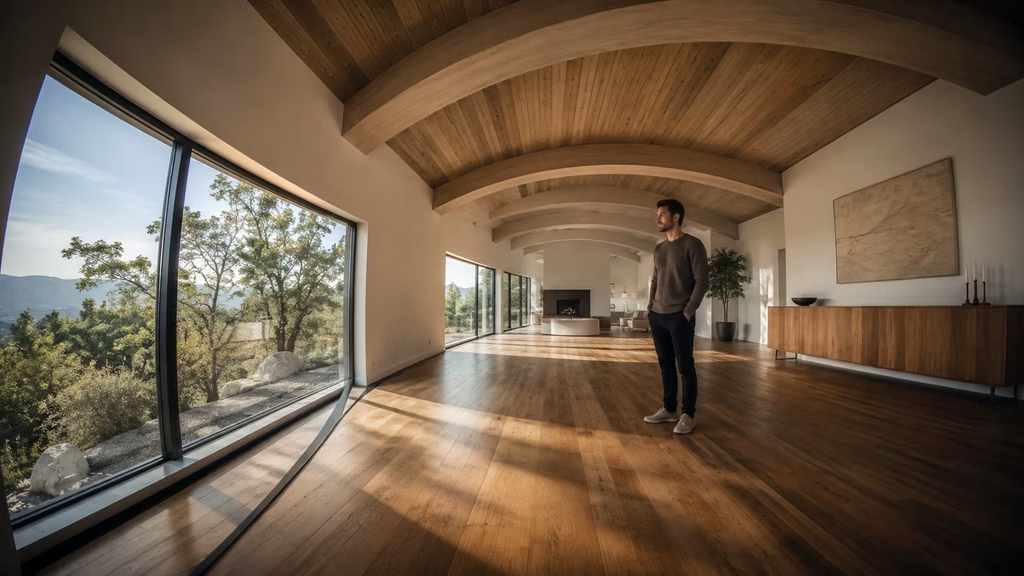
A 14mm view also encourages close camera positions. That position, rather than focal length alone, exaggerates near-to-far scale: a person two feet from the camera dominates while someone ten feet away appears small. Even a compact room can feel deep.
This depth exaggeration creates a sense of being in the space rather than observing it. The viewer feels physically present because the perspective mimics what you’d see if you were standing there looking around, not what you’d see through a narrow telephoto window.
When 14mm works
POV and immersion
A wide lens can support first-person perspective when the shot needs peripheral context and pronounced nearby movement. Body-cam footage, helmet cams, and scenes where the camera represents the character’s viewpoint often use this ultra-wide look, but POV can also use longer lenses for focused attention.
The broad field can feel immersive because it includes environmental context, although it does not literally reproduce human vision. A 50mm POV can feel focused or selective; a 14mm POV can feel expansive, kinetic, or surveillance-like.
Action and kinetic energy
Movement toward or away from a 14mm lens feels dramatic. A punch coming at camera looks explosive. A car driving toward camera grows in size fast. The depth exaggeration makes motion feel more intense.
Fight scenes, chase sequences, stunts, and any moment where energy matters benefit from ultra-wide. The lens amplifies what’s already there.
Small spaces that need to feel big
A 14mm lens makes tight spaces look bigger. A cramped apartment shot at 14mm feels livable. A car interior shot at 14mm shows the whole dashboard and both front seats in one frame.
Real-estate photography often uses ultra-wide lenses to show more of a room, sometimes making the space appear larger than it feels in person. In film, the same field of view can reveal a character’s environment without cutting to several angles.
Horror and unease
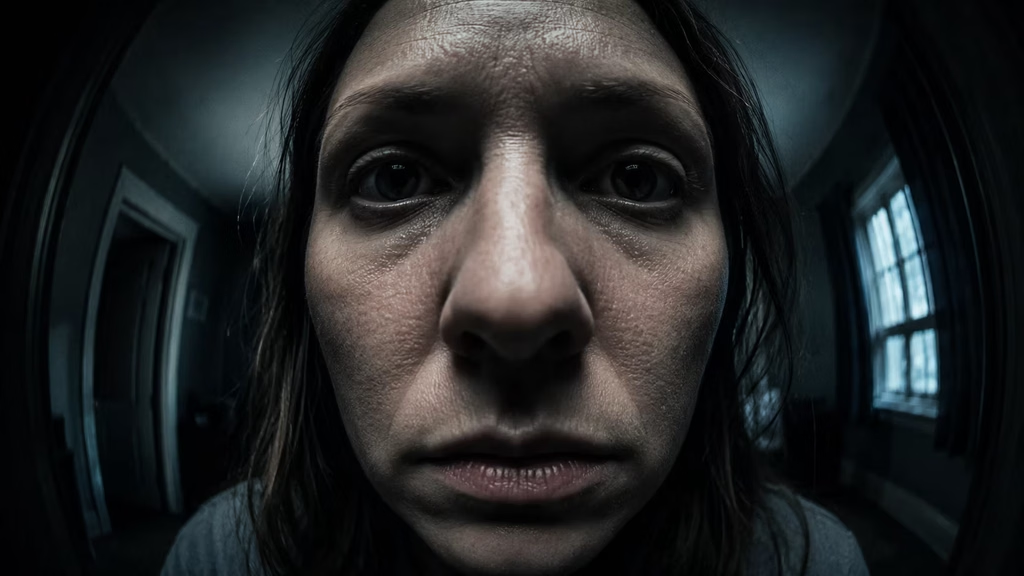
The distortion that makes faces look wrong is a feature in horror. An antagonist shot close with a 14mm lens looks unsettling without any performance. Their features stretch. Their proportions feel off. The viewer senses something is wrong before the story confirms it.
Ultra-wide lenses also create disorienting perspectives that add to psychological tension. A hallway shot at 14mm looks longer and more oppressive than it is. A room shot at 14mm feels like space itself is bending.
When 14mm is the wrong choice
Flattering portraits
A close 14mm portrait exaggerates facial depth, especially the nose and forehead, and stretches features near the edges. Avoid it when restrained proportions matter; use it when the portrait should feel intimate, comic, energetic, or disturbing.
For more restrained facial perspective, move the camera farther back and choose a focal length that preserves the desired framing. On full frame, 50mm to 85mm is a common starting range rather than a universal rule.
Formal or observational scenes
Ultra-wide lenses have personality. That personality is energetic, immersive, or distorted. If your scene needs to feel neutral, calm, or observational, 14mm adds character you don’t want.
Dialogue scenes, intimate moments, and anything where the content matters more than the style should use normal or portrait lenses instead.
Backgrounds you want to emphasize
A 14mm lens shows a lot of background, but it also makes that background look far away and small. If you want the background to feel close and relevant, use a longer lens that compresses space.
The ultra-wide pushes the background away perceptually. Use it when you want to show environment broadly, not when you want the environment to feel intimate or oppressive.
Technical considerations
Depth of field
A 14mm lens often delivers deep focus because wide shots commonly use short focus distances and include broad scenes. Depth of field still depends on aperture, sensor format, focus distance, and viewing conditions; a close-focused 14mm shot can blur its background.
Selective focus is harder when the subject is distant, but it is possible by focusing close, opening the aperture, and increasing subject-to-background distance. Composition and lighting can also isolate the subject when the frame stays deep.
Distortion correction
Some distortion can be corrected in post. Barrel distortion (curved lines) can be straightened digitally. But correcting distortion crops the frame and changes the field of view. You lose some of the wideness you shot for.
Decide which distortion belongs to the look and which is a technical defect. A lens profile can correct unwanted barrel distortion, while careful leveling and subject placement preserve the useful ultra-wide perspective.
Close focusing
Many ultra-wide lenses focus close while keeping substantial environment in frame, though minimum focus distance varies by model. This makes it possible to fill the frame with a face or object while retaining a strong sense of place.
Use close focus deliberately. The combination of proximity and ultra-wide field of view produces a pronounced perspective that nearby focal lengths can echo with different intensity.
Mixing 14mm with other lenses
A 14mm lens can define an entire project, but its strong perspective needs to be part of the visual concept. More often, filmmakers reserve it for specific moments and use less extreme focal lengths for general coverage.
One workable pattern: 14mm for expansive POV or tight-space establishing shots, 24mm or 35mm for general coverage, and 50mm or 85mm for more restrained closeups and dialogue.
The 14mm shots punctuate. They add energy or unease at specific moments. Using 14mm for everything desensitizes the viewer to its effect.
14mm in different genres
Action: Used heavily. POV shots, vehicle interiors, stunts, and any moment where you want maximum kinetic energy.
Horror: Used strategically. Unsettling closeups, disorienting environments, and POV shots where the viewer should feel trapped.
Documentary: Used occasionally. Wide shots in small spaces, POV moments, or environmental shots where showing everything matters.
Drama: Rarely used except for specific effect. Too much personality for scenes that need to feel grounded and real.
Music Videos: Used often. The distortion and energy match the stylization.
Commercials: Used for architecture, real estate, and tech products. The wideness shows space impressively.
Common mistakes
Using it for talking heads by default. Close framing can exaggerate facial depth. Use a longer focal length for restraint, or keep 14mm when the perspective supports the character and tone.
Putting important subjects at the frame edges. The most distortion happens at the edges. Keep key subjects near center where proportions stay more normal.
Over-relying on it. If every shot is 14mm, none of them feel special. Use it as punctuation, not default.
Ignoring projection and lens distortion. Edge stretching, converging verticals, and possible barrel distortion affect composition differently. Level the camera, use a lens profile, or embrace the effect intentionally.
Prompting 14mm in AI generation
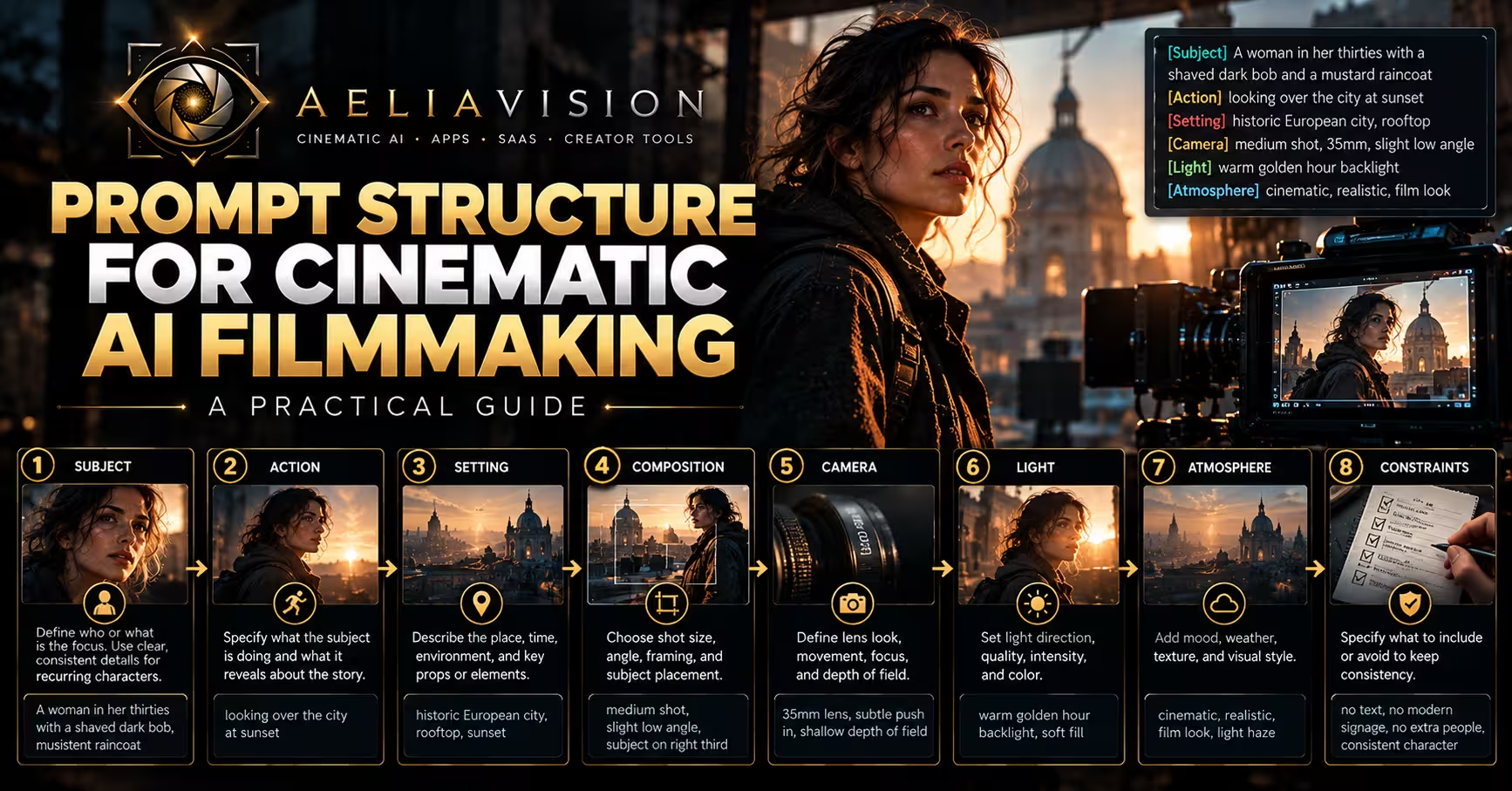
Many AI image and video models recognize “14mm lens” or “ultra-wide lens” as visual cues. Use these as starting points in a cinematic AI prompt, then judge the actual geometry:
For architectural or spatial shots: “14mm ultra-wide lens, interior shot, characteristic edge distortion, deep depth of field showing entire room.”
For POV shots: “14mm POV shot, first-person perspective, ultra-wide field of view, immersive.”
For action: “14mm lens, kinetic action shot, extreme depth exaggeration, dynamic perspective.”
For horror: “14mm ultra-wide closeup, unsettling facial distortion, psychological unease from perspective.”
Describe the focus result you want, such as deep focus across the room or a close subject against a softer background. Name edge stretching or barrel distortion separately so the model has clearer visual instructions.
When to choose 14mm over 24mm
Both are wide, but they feel different. 24mm is wide and energetic but still usable for most scenes. 14mm is extreme and specialized.
Choose 14mm when: You need an exceptionally wide field in a tight space, expansive POV, deliberate edge stretching, heightened near-camera movement, or unsettling close perspective.
Choose 24mm when: You want a wide field with less edge stretching, need several faces to read cleanly, want energetic but more restrained perspective, or need one focal length for varied coverage.
Testing your 14mm shots
Ask these questions:
1. Does the distortion serve the story or break it? If it distracts, choose a less extreme, longer focal length such as 18mm or 24mm.
2. Are faces near the edges looking stretched? Move them toward center or reframe.
3. Does the space feel appropriately vast or immersive? If it looks too normal, you might not have emphasized the ultra-wide character enough.
4. Would this shot work better with a normal lens? If the ultra-wide effect isn’t adding anything, it’s probably taking something away.
Build 14mm into the shot plan
Give 14mm a defined role in the project’s visual language. Decide when it appears, what emotion it supports, and which exceptions are allowed.
Write the rule into the shot list: for example, reserve 14mm for a particular POV, an action insert close to camera, or an establishing view in a tight location. Record why each exception earns the stronger perspective.
When storyboarding 14mm shots, mark them clearly. The board should show the exaggerated depth and distortion so you know what to expect when generating the shot.
Use 14mm with intention
A 14mm lens is a strong visual tool. Its wide field of view, edge stretching, and close-camera perspective can create immersion, energy, comedy, or unease.
Use it for POV shots, action sequences, small spaces that need to look big, and horror moments that need unsettling perspective. Avoid it for flattering portraits, formal dialogue, and anything where neutrality matters.
Before committing, check the frame edges, facial proportions, vertical lines, camera height, focus behavior, and continuity with adjacent shots. Keep the strong perspective when it serves the scene; correct or change it when it does not.
Continue learning
Lens language, camera angles, camera movement, and cinematic AI prompts.
A practical 14mm checklist
Before the shot: note sensor format, projection type, lens profile, camera distance, horizon level, subject placement, focus distance, and movement. After generation: inspect edge stretching, curved lines, facial proportions, vertical convergence, depth, and shot-to-shot continuity.
Continue reading
Further insights from the Journal
Have a story in mind?
Bring your next project into focus.
Tell us what you are creating and what you want the audience to feel.