The story in brief
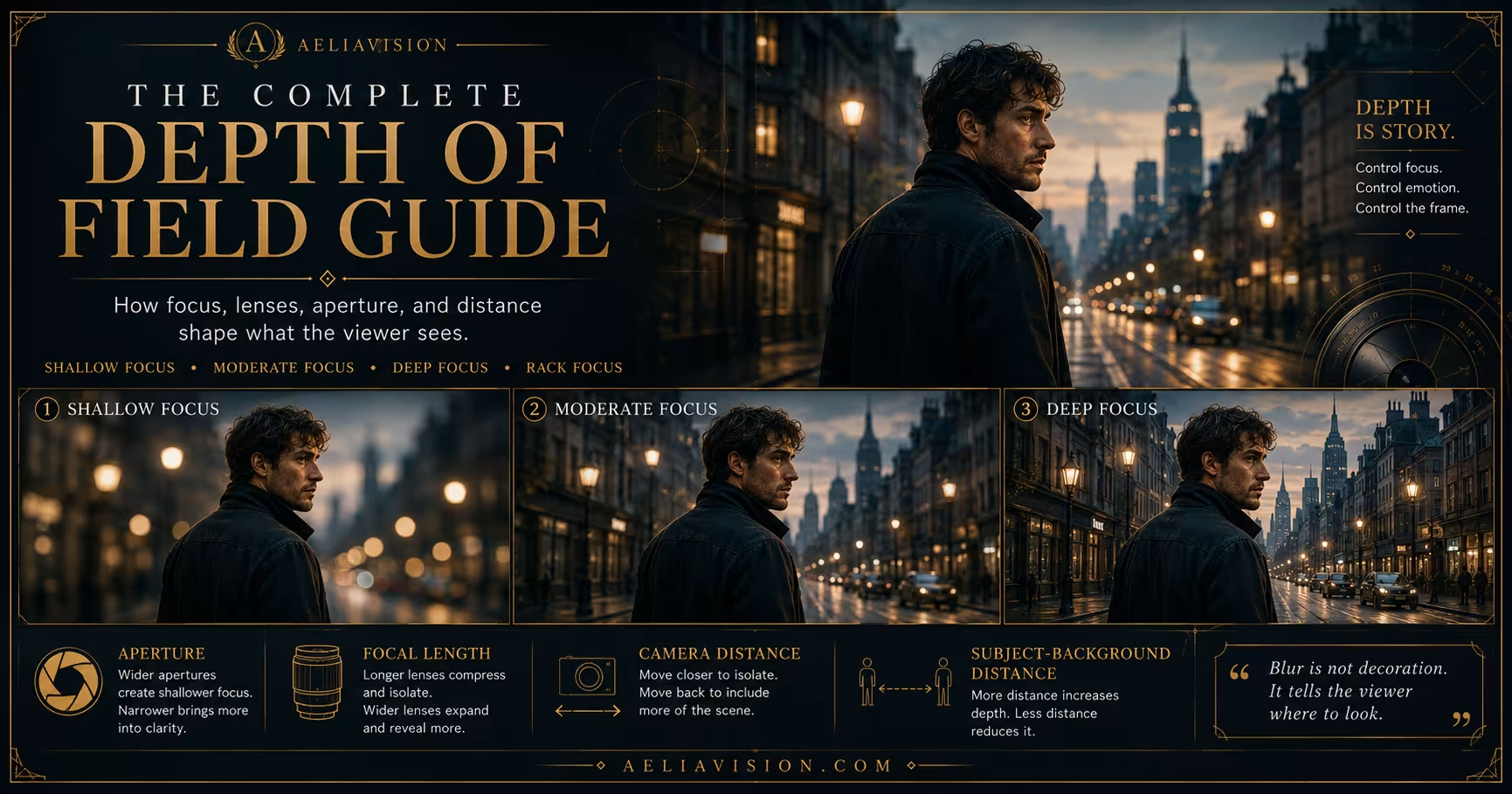
Depth of field is the amount of a scene that appears acceptably sharp from front to back. A shallow depth of field keeps a narrow area in focus and lets the rest soften. A deep depth of field keeps more of the…
Inside this story
Depth of field is the amount of a scene that appears acceptably sharp from front to back. A shallow depth of field keeps a narrow area in focus and lets the rest soften. A deep depth of field keeps more of the foreground, subject, and background readable at the same time.
Focus is a technical setting that also controls attention. A shallow-focus portrait asks the viewer to study a face. Deep focus keeps several parts of a busy frame available. A focus pull shifts attention from one subject to another without cutting. The choice changes how much intimacy, information, tension, and location detail the shot carries.
AI filmmakers need to understand depth of field because image and video models use focus language to interpret a cinematic visual language. “Shallow depth of field” can produce a portrait with soft background lights. “Deep focus” can preserve a layered environment. Pair either phrase with a lens, aperture, subject distance, focus point, and reason for the choice.
What depth of field actually means
Depth of field is the range of distance that looks acceptably sharp in an image. The lens focuses at one precise distance, but the human eye accepts a small range around that distance as sharp enough. That range is the depth of field.
It extends in front of and behind the focus point. It is not usually split equally. More of the acceptable focus range often falls behind the subject than in front of it. The exact result depends on the lens, aperture, sensor, camera distance, and the viewing conditions.
A shallow depth of field creates a narrow focus zone. A person may have one eye sharp while the ear and background soften. A deep depth of field keeps a larger area readable. A wide shot may show a nearby object, a character in the middle distance, and a building far behind all with useful detail.
The phrase “everything is in focus” is a practical description, not a literal one. Every lens has a focus plane. Deep focus means the acceptable range is large enough that the important parts of the scene remain clear.
The four main controls
Aperture
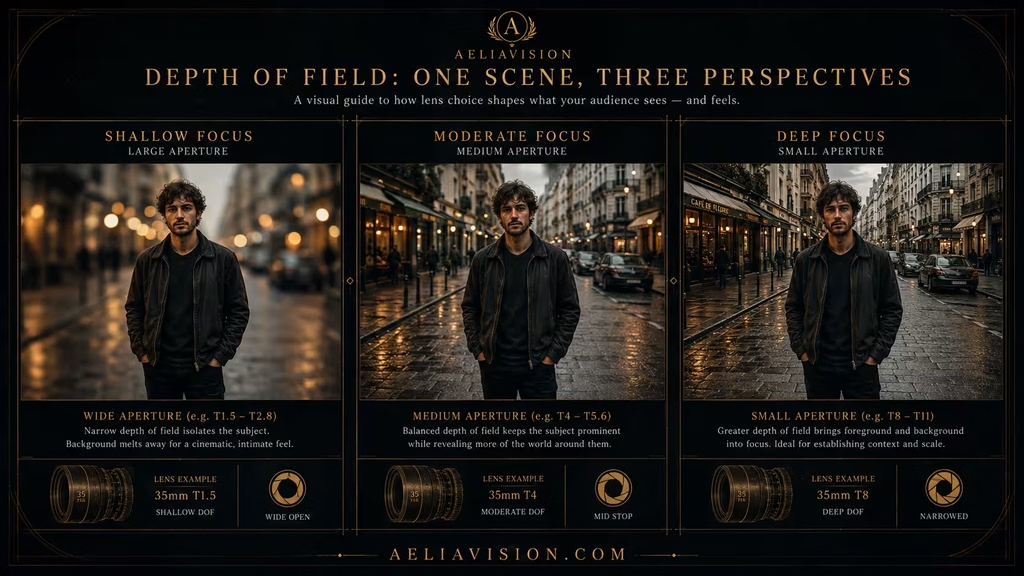
Aperture is the opening inside the lens. A wide aperture, such as f/1.4 or f/2, produces a shallower depth of field. A narrow aperture, such as f/8 or f/11, produces a deeper one.
The f-number can be confusing at first. A small number means a larger opening and less depth of field. A large number means a smaller opening and more depth of field. Opening the lens also lets in more light, so changing depth of field changes exposure as well.
In AI prompts, the model may understand “f/1.8” as a cue for shallow focus, but a result phrase is useful too:
“50mm lens, wide aperture, f/1.8 feel, eyes sharp, background softly blurred.”
For deep focus:
“24mm lens, stopped down, f/8 feel, foreground subject and distant architecture all readable.”
Focal length
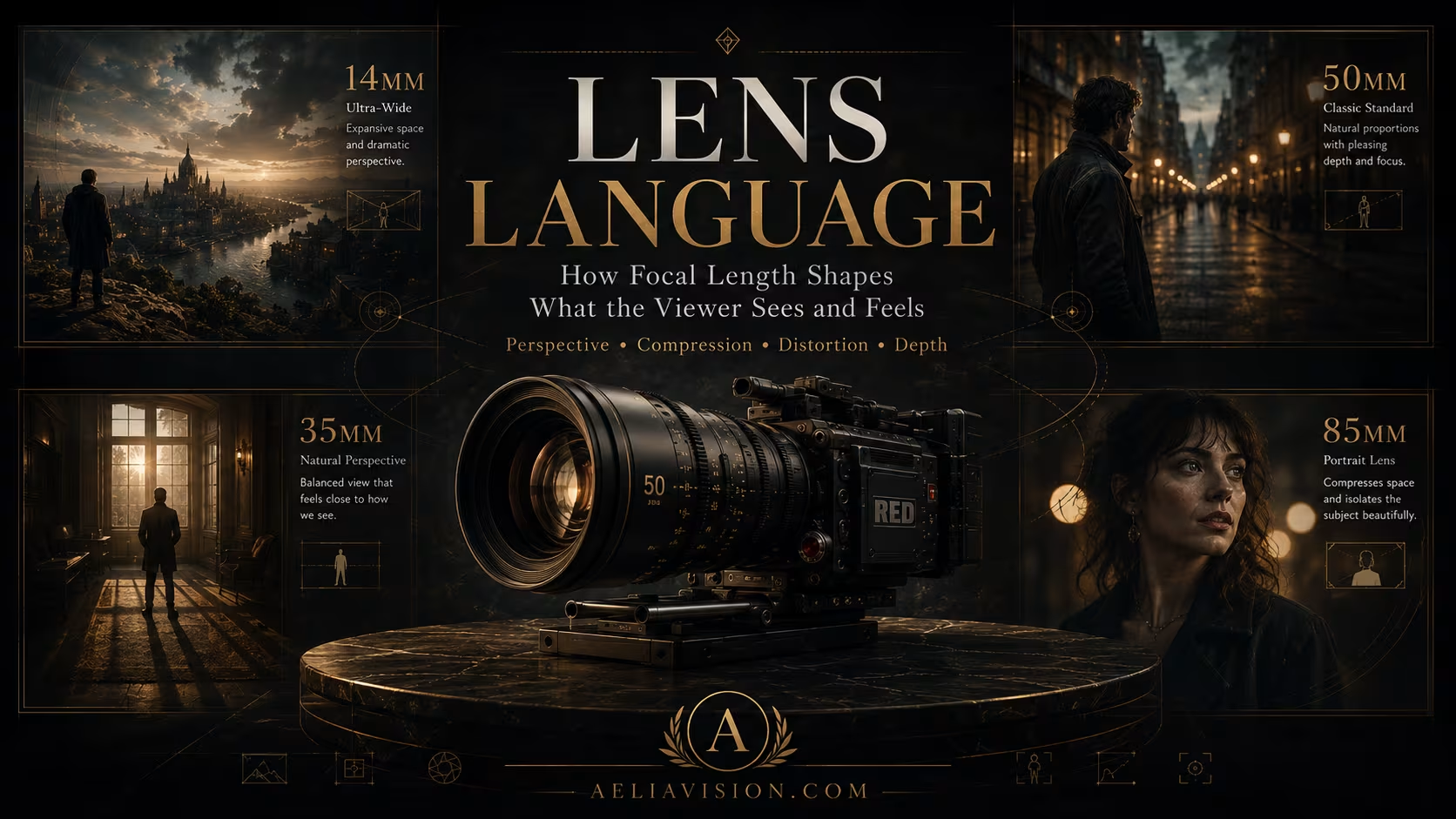
Long lenses often create stronger-looking background separation than short lenses, but depth of field at the subject can be similar when framing, aperture, and reproduction size are matched. An 85mm view enlarges a smaller part of the background, while a 24mm view includes more of the scene. Camera distance, aperture, focus distance, and background distance still shape what appears sharp.
Focal length changes field of view and often changes working distance when the framing stays the same. An 85mm portrait usually places the camera farther back than a 35mm portrait. That greater camera distance changes perspective and makes the visible background appear larger relative to the face.
Do not treat focal length as a depth-of-field switch. “24mm, f/1.4, shallow focus” may still preserve more background detail than “85mm, f/2.8, portrait separation,” depending on framing, focus distance, camera distance, sensor size, and the subject’s distance from the background.
Camera distance
With the same lens and aperture, moving closer increases subject magnification and reduces depth of field; moving back does the opposite. If you change focal length to restore the same framing, the depth of field around the subject can become similar, although the background rendering may still differ. Camera distance controls perspective and changes the relationship between foreground and background.
A wide lens close to a face can still create a soft background when focus is close and the background is far away. That near viewpoint also exaggerates differences between facial features. A longer lens used from farther back gives a more restrained facial perspective and enlarges a narrower section of the background.
Subject to background distance
The farther the background sits behind the subject, the softer it can become. A person against a wall will usually have a more recognizable background than a person standing several meters in front of a distant street.
This is an important practical fix. If the background is distracting, you do not always need a wider aperture. Move the subject away from the background, change the camera angle, or choose a simpler location. Depth of field is partly a staging decision.
Shallow depth of field and attention
Shallow focus tells the viewer where to look. The sharp face receives priority. The soft background remains as tone, color, and context, but its small details stop competing with the subject.
This works well for:
- Emotional closeups
- Portraits and interviews
- Product details
- Isolated reactions
- A character surrounded by a distracting crowd
- A small object that needs to become important
The effect can also create vulnerability. A character with a soft world behind them may appear alone even when other people are nearby. The frame removes the surrounding detail that would otherwise connect them to the group.
The danger is overuse. If every shot has a blurred background, the viewer stops feeling a change in attention. Use shallow focus when the scene asks for concentration or separation. Let the background return when the environment becomes important again.

Deep focus and spatial storytelling
Deep focus keeps the scene available. The viewer can read a character in the foreground and notice an event in the distance. This supports blocking, suspense, comedy, and scenes in which several parts of the frame matter at once.
A character may sit at a desk in the foreground while someone enters through a far door. If both remain sharp, the audience can choose when to notice the entrance. The director does not need to cut to the door immediately. The space holds the information in one composition.
Deep focus can make a location feel larger and more active. It also asks more from production design and lighting. If everything is readable, every object has the chance to distract. Compose the frame carefully and keep the visual hierarchy clear through contrast, color, movement, and placement.
Wide lenses and smaller apertures often support deep focus, but the scene still needs enough light. In AI prompts, describe the layers you want to preserve:
“Deep focus composition with a child in the foreground, a mother at the kitchen table in the midground, and rain on the window in the background, all readable in one frame.”
The model receives a spatial plan rather than a vague request for sharpness.
Moderate depth of field
Moderate focus is often the most practical choice for moving images. The subject remains clear, the background softens, and the focus range leaves room for small movements.
Use moderate depth of field for dialogue, walking shots, handheld documentary scenes, and image-to-video clips in which the subject changes position. It gives the model enough flexibility to preserve the face without turning the background into a flat blur.
Useful phrases include:
- “moderate depth of field”
- “subject sharp, background softly recognizable”
- “both eyes in focus, gentle background falloff”
- “cinematic separation without excessive blur”
- “foreground and subject clear, distant background soft”
This approach often looks more believable than maximum bokeh. The viewer can still understand where the subject is, and the clip has a better chance of surviving motion.
Focus pulls
A focus pull shifts sharpness from one subject or plane to another. The camera may stay still while attention moves from a foreground object to a face, or from a character to something in the distance.
The move has a beginning, a transition, and an end. A slow pull can reveal a realization. A quick pull can draw attention to a threat. The focus change should answer why the viewer is being asked to look somewhere else.
In an AI video prompt, describe the two focus points:
“Start focused on the key in the foreground. As the woman reaches for it, rack focus to her face in the background. Keep the camera locked and the transition smooth.”
If you name only “rack focus,” the model may change the entire composition instead of shifting focus. Include the camera behavior and the subjects.
A focus pull is difficult for some video models. A practical alternative is to generate two short shots, one focused on each subject, and cut or dissolve between them. The visual idea survives even when a continuous focus change does not.
Depth of field and camera movement
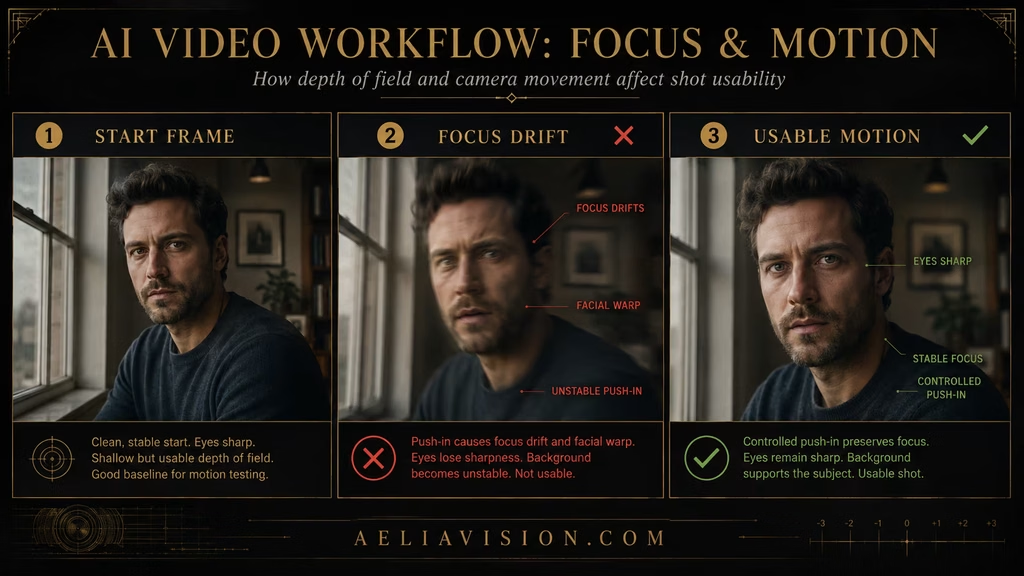
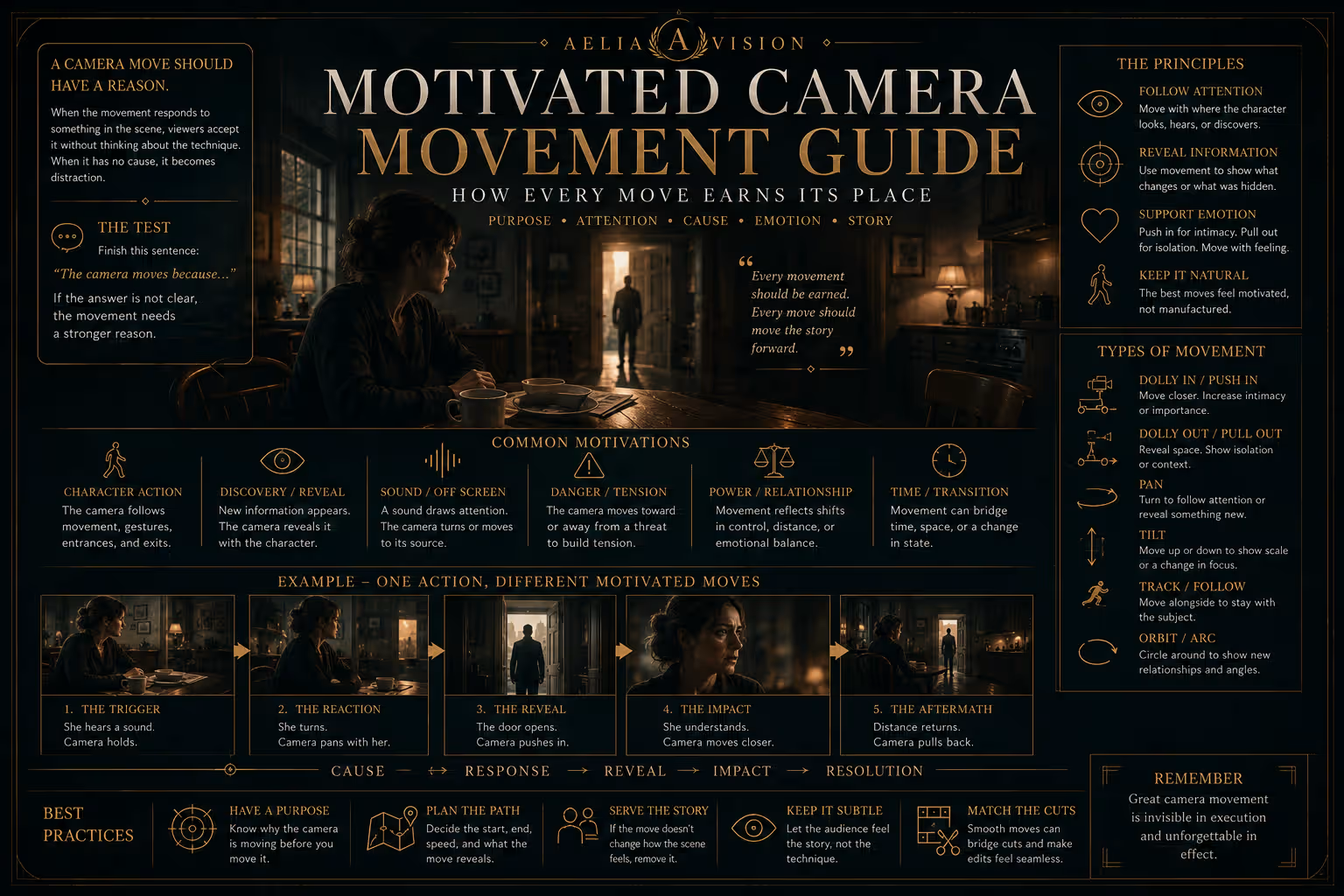
Camera movement changes how focus behaves. A push-in may bring the subject closer and make the focus range shallower. A dolly through several depth layers may require a focus plan. An orbit can move the subject and background relative to one another.
A locked-off frame is easier to keep sharp because the camera and subject relationship stays stable. A tracking shot needs more room for focus variation. A fast handheld shot benefits from moderate or deeper focus unless the blur is part of the style.
Pair the movement with the focus requirement:
“Slow 35mm dolly forward, moderate depth of field, the actor remains sharp while the room gradually softens.”
“85mm portrait, controlled push-in, both eyes remain sharp, background stays softly separated as the subject grows in frame.”
“24mm tracking shot through a market, deep focus, foreground stalls and the walking subject remain readable.”
The lens, path, and focus plan should agree with each other.
Depth of field in AI image-to-video
Image-to-video models start from a still frame and invent change over time. A shallow-focus still can create a strong opening image, but the model may struggle when the subject moves through the focus plane. Faces may soften, eyes may shift, and background objects can melt into the subject.
For reliable clips:
- Keep the motion modest when focus is very shallow.
- Use a centered or clearly staged subject.
- Specify which part of the subject must remain sharp.
- Describe the background as soft but stable.
- Use a reference frame with clear depth layers.
- Generate shorter clips and select the cleanest take.
If the goal is a moving character rather than a still portrait, moderate focus usually gives better results. You can add a controlled focus pull in the edit or use a post-production blur on a stable mask.
Depth of field and composition
Focus works with composition. A shallow-focus frame can make a centered subject feel isolated. A subject placed on a third with a soft area of empty space can leave room for a look or an unseen threat. Deep focus can support symmetry, layered blocking, and visual contrasts between foreground and background.
Do not use shallow focus to rescue a weak composition. Blur can hide clutter, but it can also hide useful information and make the frame feel generic. If the background tells the story, keep enough of it sharp to be read.
Before opening the aperture, decide whether the background carries story information. If it explains the character’s job, danger, history, or destination, keep enough detail to read it. If it only creates noise, simplify the set or soften it through focus.
Depth of field and lighting
Aperture affects exposure. Opening the lens lets in more light, while stopping down requires more light or a change in shutter or ISO. That relationship matters in real cinematography and helps AI prompts remain internally consistent.
A prompt asking for f/16, a dark room, and a bright clean image needs a strong light source or another exposure choice. A prompt asking for f/1.4 and deep focus also needs enough subject distance and suitable scene geometry. Without that context, the model may choose one instruction and ignore the others.
Connect the focus request to the light:
“Deep-focus interior at an f/8 feel, strong daylight through the large windows, practical lamps visible, shadows retain detail.”
“Shallow-focus portrait at an f/1.8 feel, soft key light on the face, background falls into darkness.”
The image becomes easier to control when the exposure and focus choices support each other.
Hyperfocal distance and practical deep focus
For wide shots, filmmakers sometimes focus at a distance that keeps a broad range from the foreground to infinity acceptably sharp. This is related to hyperfocal distance. You do not need to calculate it for every AI prompt, but the idea is useful: deep focus begins with where the lens is focused and how the scene is staged.
A wide lens, a moderate aperture, and a subject placed at a sensible distance can keep a landscape or room clear. Put an object extremely close to the camera and it may still fall soft, even when the rest of the frame is sharp.
If you need a foreground object to remain clear, say so. If the foreground should be a soft frame around the subject, say that instead. Depth of field is not a single global setting. It changes across the space.
Bokeh
Bokeh describes the character of out-of-focus highlights. Point lights can become circles, ovals, or irregular shapes depending on the lens aperture and optical design. In AI prompts, “soft circular bokeh” often produces a familiar portrait and commercial look.
Bokeh should support the frame rather than become the frame. Too many bright circles can make an image look like a stock portrait or generic advertisement. Use a restrained background with a few useful highlights.
Anamorphic lenses can produce distinctive oval bokeh and horizontal flares. A spherical lens usually produces rounder, more neutral blur. If the lens character matters, specify it along with depth of field.
“85mm spherical portrait, moderate shallow focus, soft round bokeh from distant practical lights, natural facial proportions.”
“Anamorphic portrait, oval bokeh, gentle horizontal flare, background softly compressed, restrained focus falloff.”
Common mistakes with depth of field
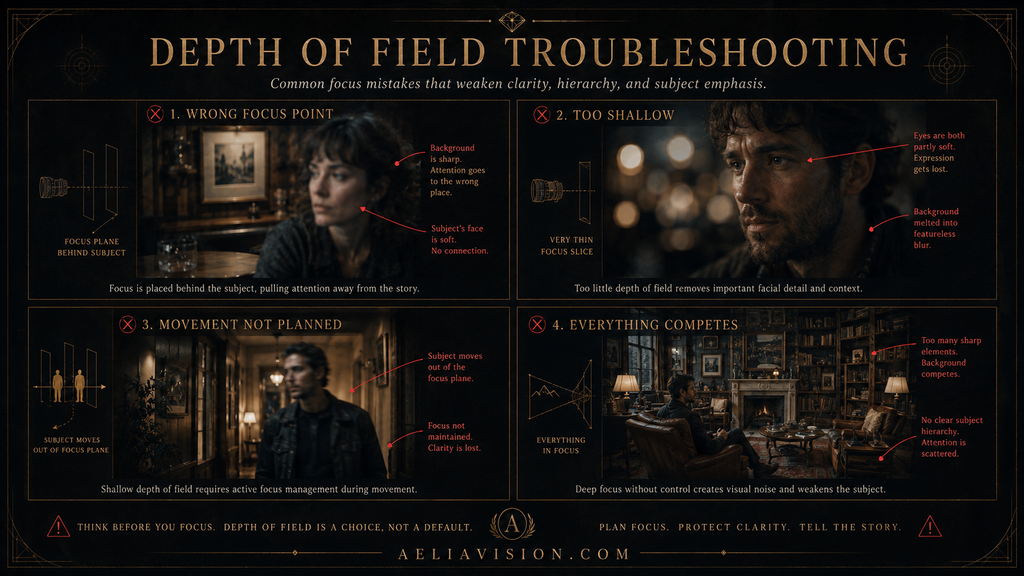
Asking for shallow focus without naming the subject
The model may blur the wrong object or turn the entire background into a featureless wash. Name the focus point and what should remain readable.
Confusing blur with compression
Background compression comes from camera distance and framing, while blur depends on aperture, magnification, focus distance, and background distance. A 35mm lens can blur a distant background when the camera focuses close. State the effect you want instead of using blur and compression interchangeably.
Using maximum blur for every portrait
Extreme bokeh quickly becomes repetitive. Moderate separation often gives the face priority while keeping the location alive.
Forgetting subject movement
A shallow focus portrait may work as a still and fail as video. If the character moves, give the focus range more room or keep the movement small.
Using deep focus in a cluttered frame
Deep focus makes every detail available. If the composition has no hierarchy, the viewer has nowhere to settle. Use light, color, blocking, and contrast to direct attention.
Ignoring aperture and exposure
A wide aperture brightens the image. A narrow aperture reduces light. If the prompt asks for both a dark scene and deep focus, include a light source that can support it.
Letting blur hide a weak story
Focus can guide attention, but it cannot give an object meaning. Decide why the viewer needs to see the subject before choosing how much of the rest of the frame to soften.
Prompt templates
Shallow emotional portrait
“Closeup of a tired paramedic after a night shift, 85mm lens, shallow depth of field, both eyes sharp, hospital corridor reduced to soft blue and green shapes, quiet expression, soft side light.”
Moderate dialogue shot
“Two people talk across a small kitchen table, 50mm lens, moderate depth of field, both faces readable, background softly recognizable with a practical lamp, natural eye-level camera.”
Deep-focus suspense
“Deep-focus 24mm interior shot. A woman stands in the foreground beside the kitchen counter while a figure appears through the open doorway in the background. Both remain readable, cool window light, slow tension.”
Focus pull
“Locked-off 50mm shot. Begin focused on the handwritten note in the foreground. As the character reaches for it, rack focus smoothly to her face behind the note. Keep the camera still and preserve the room.”
Image-to-video portrait
“Use the reference still as the starting composition. Slow controlled push-in on the subject, moderate shallow depth of field, both eyes remain sharp, background stays softly separated, no focus hunting and no identity change.”
A practical depth-of-field workflow
Start with the story purpose. Decide whether the viewer should study a face, read a whole space, follow a movement, or notice a change between two planes.
Choose the focus mode. Shallow focus gives priority to one area. Deep focus keeps several areas available. Moderate focus gives moving subjects some room.
Choose a lens and camera distance that support the mode. A longer lens can enlarge background blur and isolate a narrow view. A wide lens can include layered space. A normal lens sits between those fields of view.
Set the implied aperture and light together. A wide aperture needs less light and creates blur. A narrow aperture needs more light and preserves detail.
Stage the distance. Put the subject away from the background if you want separation. Bring layers closer together if compression or shared sharpness matters.
If the image will become video, plan the movement. Give the subject a path that stays compatible with the focus range. Keep the camera move simple and state what must remain sharp.
Check the final frame. Does the focus choice direct attention where the story needs it? If the answer is no, change the focus plan before adding more stylistic language.
Build focus into the shot plan
Record depth of field in the shot plan beside the lens, aperture feel, focus priority, background treatment, and any focus pull. Carry those choices through the project’s AI film pipeline so adjacent shots do not change focus style without a story reason.
Use depth of field as part of the shot’s emotional design. A character may begin in moderate focus while the environment carries context, then move into shallower focus as the scene becomes private. A deep-focus frame can restore the wider setting when the audience needs to understand it.
For AI films, keep depth language aligned across the reference image, motion prompt, and final grade. A soft still followed by a sharp video clip feels like a change in camera, even when the story has not changed. Use reference frames and short tests to keep the focus behavior stable.
Choose what the audience can read
Depth of field controls how much of the scene the viewer can read at once. Shallow focus concentrates attention on a face, object, or detail. Deep focus lets several layers of the frame carry information. Moderate focus gives moving subjects enough room to remain clear while preserving a soft sense of separation.
Aperture, focal length, camera distance, and subject-background distance all shape the result. Choose them together. Use focus pulls when attention needs to move inside one shot. Use wider depth when blocking and space matter. Avoid maximum blur when it hides useful information or makes every image look the same.
In AI prompts, name the focus point, lens, amount of background detail, and movement the subject must survive. Those choices tell the viewer where to look and give the model a clearer continuity target.
- Lens language guide
- 35mm lens guide
- Camera movement guide
- Camera angles guide
- Cinematic visual language guide
- Cinematic AI prompt guide
- 14mm lens guide
- AI film pipeline
- Practical check: record the focus point, acceptable focus range, aperture feel, and background distance
- Compare framing, camera distance, and aperture together
- Keep focus behavior consistent across reference frames and motion prompts
- Check both eyes, subject movement, focus transitions, and background readability
Continue reading
Further insights from the Journal

Have a story in mind?
Bring your next project into focus.
Tell us what you are creating and what you want the audience to feel.