The story in brief
Learn cinematic visual language for AI creation, including camera angles, lenses, blocking, composition, movement, lighting, focus, genre, and prompt design.
Inside this story
A master guide to camera angles, lenses, blocking, movement, power geometry, and emotion for AI cinematic creators
Table of contents
Cinematic visual language is the grammar of cinema. It is the system filmmakers use to transform story into images, emotion into geometry, and character psychology into camera placement, lens choice, blocking, lighting, focus, movement, and composition.
When an image or scene feels “cinematic,” people are usually responding to more than beauty. They are responding to intention. The camera knows where to stand. The lens shapes how space feels. Characters are placed in ways that reveal power, fear, love, distance, conflict, or vulnerability. The frame guides the eye. The lighting supports the emotion. The shot feels like it belongs inside a story.
That is cinematic visual language.
For AI cinematic creators, the practical problem is straightforward: modern AI tools can generate visually impressive images and videos, but they do not automatically understand dramatic meaning. Without cinematic language, an AI result may have shallow depth of field, dramatic lighting, realistic texture, and a “film still” look, yet still feel generic or emotionally empty.
This guide helps you think like a director and cinematographer before you generate an image or video. Start with the question, “What should this shot make the audience feel, and how can camera language express that feeling?”
That question should come before the prompt.
What is cinematic visual language?
Cinematic visual language is the use of visual choices to communicate story, emotion, meaning, and power. It includes camera angle, camera height, shot size, lens choice, framing, composition, blocking, eyelines, movement, focus, depth, lighting, color, rhythm, space, and visual hierarchy.
Each of these elements functions like a word in a sentence. A low angle says something. A close-up says something. A wide lens close to a face says something. A character placed at the edge of the frame says something. A slow push-in says something. A locked-off camera says something. A shadow across the eyes says something.
The art of cinematic visual language is making all of those elements speak together.
A strong cinematic shot does not happen because the creator adds random “cinematic” keywords. It happens because every visual decision supports the story beat. For example, imagine a character discovering they have been betrayed. You could show that moment as an eye-level close-up for intimate shock, a high-angle wide shot for vulnerability, a slow push-in for emotional pressure, a profile shot to withhold the reaction, or a locked-off frame to make the betrayal feel cold and inevitable.
Each version shows the same event, but each one creates a different emotional meaning. That difference is visual language.
The core principle: emotion becomes geometry
The strongest way to understand cinematic visual language is simple:
Emotion becomes geometry.
Fear can become a high angle, empty space, and deep shadows. Power can become a low angle, central framing, and large scale. Loneliness can become negative space and distance from the camera. Romance can become soft light, close eyelines, and gentle movement. Suspicion can become obstructed foregrounds, partial visibility, and profile framing. Chaos can become handheld motion, fragmented composition, and unstable blocking.
A cinematic creator must translate emotion into visual structure. Before choosing the camera, ask who owns the emotional moment, who has power, who is vulnerable, who is hiding something, who is watching, and who is trapped. Also ask whether the audience should feel close or distant, whether the frame should feel stable or unstable, and whether the world should feel open, intimate, oppressive, or claustrophobic.
When you start with emotion, the image becomes directed. When you start only with style, the image becomes decoration.
Camera angles: the psychology of power
Camera angle is one of the clearest forms of cinematic language. It changes how the audience feels about a character, object, or space. A camera angle is never just a viewpoint. It is a psychological position.
Eye-level angle
An eye-level camera places the viewer at the same height as the subject. It often feels honest, human, neutral, grounded, intimate, realistic, and emotionally accessible. This angle is useful when you want the audience to connect with a character without judgment.
For example, imagine a mother sitting at a kitchen table, silently reading a letter. The camera stays at eye level, close enough to feel her emotion but not so close that it becomes melodramatic. The shot quietly tells the viewer, “We are with her.”
AI prompt language:eye-level camera, emotionally grounded, natural human perspective, intimate but not exaggerated
Low angle
A low angle places the camera below the subject, looking upward. It can make a character feel powerful, dominant, heroic, threatening, mythic, larger than life, or dangerous.
A low angle can make a king feel majestic, a villain feel intimidating, or a hero feel legendary. However, it should never be used only because it looks cool. It must match the story.
For example, a ruler standing at the top of stone steps while the crowd kneels below becomes visually dominant through the low angle. The shot says, “This person has power over the space.”
AI prompt language:subtle low-angle shot, camera below eyeline, subject visually dominant, powerful silhouette, controlled authority
High angle
A high angle places the camera above the subject, looking down. It can make the subject feel vulnerable, small, weak, trapped, observed, defeated, or exposed.
For example, a soldier standing alone in a ruined city after battle can be shown from above to make the character feel tiny compared to the destruction around them. The shot says, “The world is bigger than this person.”
AI prompt language:slight high-angle shot, subject visually diminished, vulnerable within the environment, large empty space around them
Overhead shot
An overhead shot looks directly or almost directly down from above. It can feel godlike, tactical, abstract, detached, ritualistic, systemic, or inevitable.
This angle is useful when the story is about patterns, systems, fate, geography, choreography, or social control. For example, prisoners walking in perfect formation through a courtyard become shapes inside a system when filmed from overhead.
AI prompt language:top-down overhead shot, characters reduced within the geometry of the environment, system-level perspective
Dutch angle
A Dutch angle tilts the camera so the horizon is not level. It can suggest instability, paranoia, psychological tension, madness, danger, disorientation, or broken reality.
This angle should be used carefully. A Dutch angle becomes weak when it is random, but powerful when it reflects a character’s mental state or a world that has become unstable. For example, when a detective realizes the room is not what it seems, a slight tilt can make the space feel wrong before the audience fully understands why.
AI prompt language:subtle Dutch angle, psychological instability, rising tension, controlled frame tilt, no exaggerated distortion
Camera angle reference table
| Camera Angle | Emotional Meaning | Best Used For | AI Prompt Phrase |
|---|---|---|---|
| Eye Level | Human, honest, grounded | Drama, dialogue, emotional realism | eye-level camera, natural human perspective |
| Low Angle | Power, dominance, mythic scale | Heroes, villains, rulers, monuments | subtle low-angle shot, subject visually dominant |
| High Angle | Vulnerability, weakness, isolation | Defeat, loneliness, helplessness | slight high-angle shot, subject visually diminished |
| Overhead | Fate, system, pattern, detachment | Rituals, prisons, battles, choreography | top-down overhead shot, system-level perspective |
| Dutch Angle | Instability, paranoia, danger | Psychological tension, horror, confusion | subtle Dutch angle, controlled frame tilt |
Shot size: emotional distance from the subject
Shot size controls how close the audience feels to the subject. The closer the camera gets, the more emotional pressure the image usually creates. A wide shot can make a character feel small inside the world, while a close-up can force the audience into the character’s private emotional space.
Extreme wide shot
An extreme wide shot shows the subject very small inside a large environment. It is useful for scale, isolation, epic scope, loneliness, world-building, journey, survival, or destiny.
Imagine a lone traveler crossing a massive desert at sunset, almost swallowed by the landscape. The shot says, “The world is vast, and the character is small.”
AI prompt language:extreme wide shot, tiny human figure against massive landscape, epic scale, atmospheric depth
Wide shot
A wide shot shows the full body and the surrounding environment. It is useful for blocking, action, geography, character relationships, physical distance, and environmental storytelling.
For example, two brothers standing at opposite ends of a ruined throne room can be framed in a wide shot to show emotional distance through physical space. The shot says, “The relationship is inside the geography.”
AI prompt language:wide shot, full-body blocking, clear spatial relationship between characters, environment supports the conflict
Medium shot
A medium shot usually frames the subject from the waist or chest upward. It is useful for dialogue, human presence, natural realism, controlled emotion, and character interaction.
For example, a detective listening quietly across a desk in a medium shot feels readable but still reserved. The audience can study body language and expression without being forced into an intense emotional close-up.
AI prompt language:medium shot, grounded human framing, readable body language, natural cinematic perspective
Close-up
A close-up frames the face or an important object. It is useful for emotion, realization, fear, grief, love, suspicion, and internal conflict.
Imagine a queen hearing terrible news but refusing to react in public. A close-up lets the audience see the tiny cracks in her control. The shot says, “This feeling matters.”
AI prompt language:close-up, face fills the frame, restrained emotion, focus on the eyes, subtle micro-expression
Extreme close-up
An extreme close-up isolates a small detail such as eyes, hands, tears, weapons, clues, symbolic objects, or product texture. It is useful when a small detail carries the emotional truth of the scene.
For example, a trembling hand tightening around a wedding ring can communicate grief, memory, fear, or commitment without dialogue.
AI prompt language:extreme close-up, symbolic detail, shallow depth of field, tactile texture, emotionally loaded object
Shot size reference table
| Shot Size | Emotional Function | Best Used For |
|---|---|---|
| Extreme Wide Shot | Scale, isolation, destiny | Epic landscapes, journeys, survival |
| Wide Shot | Geography and relationships | Blocking, action, physical distance |
| Medium Shot | Human realism | Dialogue, grounded drama, interaction |
| Close-Up | Emotional pressure | Realization, grief, fear, love |
| Extreme Close-Up | Symbolic detail | Eyes, hands, objects, clues, texture |
Lens language: how optics change emotion
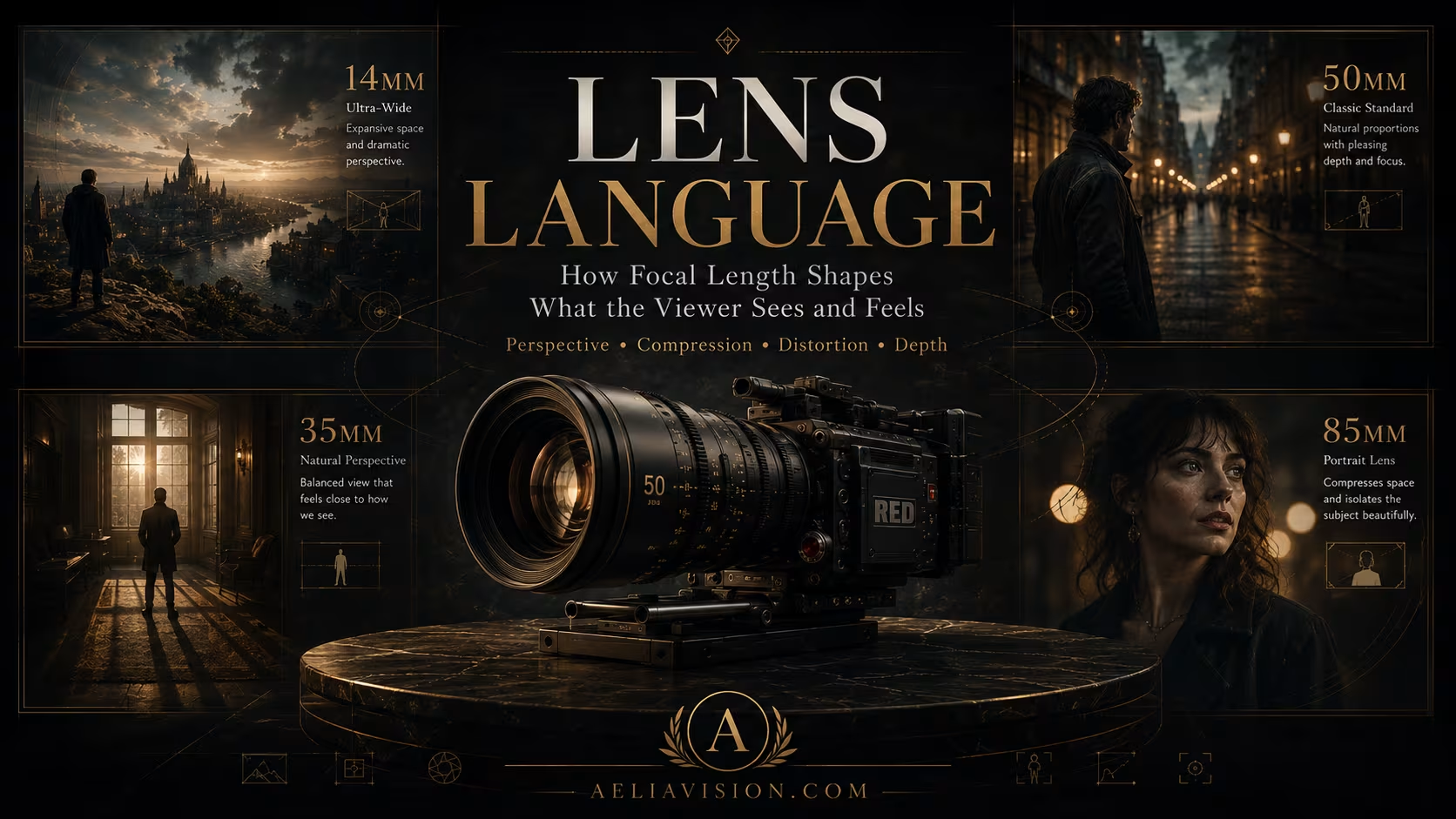
Lens choice changes how space feels. A lens is not only a technical choice; it is emotional architecture. For AI creators, lens language can help guide the model toward a more specific cinematic result.
Wide lenses
Wide lenses, such as 18mm, 21mm, or 24mm, show more of the environment and exaggerate the relationship between foreground and background. They can create scale, energy, immersion, distortion, claustrophobia, environmental pressure, and physical intensity.
A wide lens close to a face can feel uncomfortable and invasive. A wide lens inside a massive palace can make the architecture feel monumental. In both cases, the lens changes the emotional relationship between the subject and the world.
Best uses: action scenes, fantasy environments, large interiors, chase sequences, claustrophobic rooms, subjective fear, and environmental storytelling.
AI prompt language:20mm wide-angle lens, expanded space, strong foreground-to-background depth, immersive environment, subtle perspective distortion
Normal lenses
Normal lenses, such as 35mm or 50mm, feel closer to natural human observation. They are useful for drama, dialogue, street-level storytelling, balanced perspective, emotional scenes, and grounded realism.
A 35mm lens can keep the subject connected to the environment, while a 50mm lens often feels more intimate without becoming too compressed.
AI prompt language:35mm lens, natural perspective, grounded cinematic realism, subject and environment both readable
Telephoto lenses
Telephoto lenses, such as 85mm, 100mm, or 135mm, compress space and isolate the subject. They can create beauty, emotional isolation, distance, romantic softness, psychological pressure, separation from the world, or even surveillance.
For example, an 85mm lens on a singer backstage can compress the lights behind her into soft bokeh, isolating her from the chaos around her. The lens says, “She is alone inside the moment.”
AI prompt language:85mm portrait lens, compressed background, soft bokeh, emotional isolation, subject sharply separated from environment
Long telephoto lenses
Long telephoto lenses create even stronger compression. They can make subjects feel watched from a distance, especially in scenes involving surveillance, crowds, war, hidden danger, or emotional separation.
AI prompt language:long telephoto lens, compressed city background, distant observational feeling, surveillance-like framing
Anamorphic look
Anamorphic lenses are often associated with widescreen cinema. They can create wider horizontal compositions, oval bokeh, restrained horizontal flares, organic edge softness, epic scale, and dreamlike distortion.
However, anamorphic does not automatically mean cinematic. It should serve the story. Use it when the world should feel authored, epic, mythic, romantic, or stylized.
AI prompt language:anamorphic widescreen composition, subtle oval bokeh, restrained horizontal flare, organic edge falloff, cinematic scale
Spherical look
Spherical lenses usually feel cleaner, more grounded, and more natural. They are useful for realistic drama, documentary-style scenes, naturalistic stories, clean geometry, and honest human intimacy.
AI prompt language:spherical lens look, grounded realism, clean geometry, natural flares, honest human perspective
Lens reference table
| Lens Type | Emotional Effect | Best Used For |
|---|---|---|
| Wide Lens | Scale, energy, immersion, distortion | Action, fantasy, interiors, fear |
| Normal Lens | Natural realism, balance | Drama, dialogue, street-level scenes |
| Telephoto Lens | Isolation, compression, beauty | Portraits, romance, psychological pressure |
| Long Telephoto | Surveillance, distance, danger | War, crowds, observation, hidden threats |
| Anamorphic | Epic, stylized, authored | Fantasy, myth, romance, spectacle |
| Spherical | Clean, grounded, natural | Realistic drama, documentary feeling |
Blocking: turning relationships into space
Blocking is the placement and movement of characters inside the scene. It is one of the most important parts of cinematic visual language because it turns relationships into visible geometry.
Blocking answers important emotional questions: who is close, who is distant, who controls the room, who is trapped, who is watching, who turns away, who moves first, who stays still, and who crosses into another character’s space.
Good blocking makes emotion visible before dialogue explains it.
Distance between characters
Physical distance often represents emotional distance. Two characters standing close may suggest intimacy, pressure, control, or conflict. Two characters separated by a room may suggest broken trust, fear, class difference, emotional distance, or social hierarchy.
For example, a father and son arguing across a long dining table are not only separated by furniture. The table becomes a visual barrier. The blocking says, “They are emotionally separated.”
AI prompt language:two characters blocked far apart across a long table, physical distance expressing emotional separation
Height difference
Height creates power. A character standing while another sits often appears more dominant. A character positioned on stairs, a balcony, or a platform gains visual authority. A character on the floor may feel defeated, vulnerable, or powerless.
For example, a CEO standing by the window while an employee sits in shadow immediately creates hierarchy. The blocking says, “One person owns the room.”
AI prompt language:dominant character standing higher in frame, subordinate character seated lower, clear power hierarchy
Facing and turning away
A character facing another directly suggests confrontation, honesty, challenge, or openness. A character turned away may suggest avoidance, secrecy, shame, grief, refusal, or emotional withdrawal.
A profile can feel mysterious or withheld. A back-facing figure can feel lonely, powerful, unknown, or unreachable depending on the story context.
AI prompt language:character turned away from the speaker, emotional refusal, profile-biased framing, withheld reaction
Foreground and background blocking
Characters can also be blocked in different depth layers. One character in the foreground and another in the background can show distance, secrecy, surveillance, or emotional division.
For example, a child playing in the foreground while two adults argue softly in the background creates layered storytelling. The child is close to the conflict but does not fully understand it.
AI prompt language:layered blocking, child in foreground, adults arguing in background, deep emotional separation across space
Eyelines: invisible lines of emotion
Eyelines are where characters look. They guide audience attention and define relationships inside the frame.
A direct or near-lens eyeline can create intimacy, confrontation, or emotional access. An off-camera eyeline creates a relationship with something unseen, which can build curiosity, fear, longing, or suspense. Avoided eyelines can express shame, distance, secrecy, emotional conflict, or broken trust.
For AI video, eyelines are especially important because models can easily create confusing gaze directions. If two characters are supposed to be looking at each other, the prompt should clearly define where each character is looking.
Direct eyeline
A direct or near-lens eyeline feels intense. It can make the viewer feel personally addressed.
AI prompt language:near-lens eyeline, intense emotional connection, intimate confrontation
Off-camera eyeline
An off-camera eyeline suggests that something outside the frame matters. This can create suspense, curiosity, or fear.
AI prompt language:character looking off-camera toward unseen threat, suspenseful eyeline, audience curiosity
Avoided eyeline
When characters avoid looking at each other, the frame can express tension without dialogue.
AI prompt language:two characters close together but avoiding eye contact, emotional distance, quiet tension
Clean eyeline continuity
For AI video, always define eyeline direction when geography matters.
AI prompt language:preserve clear eyeline direction, character looks toward the person on camera-left, no eyeline mismatch
Composition: directing the viewer’s eye
Composition is how visual elements are arranged inside the frame. A cinematic composition guides the viewer’s attention. The audience should know where to look first, second, and third.
Visual hierarchy
Visual hierarchy means the frame has a clear order of importance. The main subject should stand out through placement, light, contrast, focus, size, color, movement, framing, or negative space.
This is especially important for AI creators because AI often adds detail everywhere. When every part of the frame is equally detailed, the image becomes noisy and the story becomes weaker.
AI prompt language:clear visual hierarchy, main subject dominant, background secondary, no distracting extra details
Rule of thirds
The rule of thirds places important subjects along imaginary vertical or horizontal thirds. It often creates framing that feels balanced but still natural.
For example, a lonely character placed on the left third while a stormy sky fills the right side creates emotional weight. The empty space becomes part of the story.
AI prompt language:subject placed on the left third, large negative space on the right, emotionally weighted composition
Centered composition
Centered framing can feel powerful, formal, iconic, ritualistic, symmetrical, controlled, or trapped. It is useful for authority, ceremony, power, obsession, and visual order.
For example, a ruler sitting centered on a throne surrounded by symmetrical architecture immediately feels authoritative.
AI prompt language:centered symmetrical composition, formal power, architectural balance, iconic framing
Asymmetrical composition
Asymmetry can feel natural, tense, lonely, unstable, realistic, or psychological. A character pushed to the edge of the frame can feel emotionally displaced or vulnerable.
AI prompt language:asymmetrical composition, subject pushed to frame edge, negative space creates emotional tension
Leading lines
Leading lines guide the eye through the frame. They can come from roads, hallways, tables, shadows, light beams, staircases, architecture, rivers, weapons, or rows of people.
For example, a hallway leading toward a dark door at the end of the frame creates suspense because the composition points the audience toward danger.
AI prompt language:strong leading lines guiding the eye toward the distant doorway, suspenseful depth
Negative space: the power of what is empty
Negative space is the empty area around a subject. It is one of the most powerful cinematic tools because it allows emptiness to carry meaning.
In horror, negative space makes the audience search the frame for danger. In drama, it can show loneliness or emotional emptiness. In fantasy, it can show the scale of the world. In product visuals, it can create luxury, elegance, and premium simplicity.
For example, a woman standing alone in a huge empty room, placed low in the frame, feels overwhelmed because the room visually consumes her. Another example is a character placed on the far left, staring into darkness on the right. The empty space becomes suspenseful because the audience expects something to appear there.
AI prompt language:large negative space above and around the subject, emotional isolation, quiet cinematic tension
Or:
character on far left, empty dark space on the right, suspenseful negative space, audience anticipation
Negative space is not empty by accident. In cinema, it is empty with purpose.
Power geometry: who owns the frame?
Power geometry is the visual design of dominance, vulnerability, control, and pressure inside the frame. It uses camera height, subject size, frame position, depth placement, eyeline direction, movement, lighting, blocking, and environment scale to answer one question:
Who has power in this shot?
A character can feel powerful because they are larger in frame, centered, higher than others, sharper in focus, better lit, blocking the path, looking directly at someone, moving while others stay still, or surrounded by symmetrical architecture.
A character can feel vulnerable because they are smaller in frame, lower in the image, edge-framed, obstructed, shadowed, surrounded by empty space, looking away, physically separated, or visually pressed by the environment.
For example, a judge sitting high in the background, centered and lit, while the accused stands small in the foreground, lower and shadowed, creates a clear power relationship. The system dominates the individual.
AI prompt language:strong power geometry, judge elevated and centered, accused lower and smaller in frame, visual hierarchy expresses authority
Another example is a villain standing close to the camera in silhouette while the hero appears small in the background. The villain controls the moment because the frame gives them visual dominance.
AI prompt language:villain large in foreground silhouette, hero small in background, layered power imbalance, ominous visual hierarchy
Power geometry is essential for AI cinematic creators because it prevents random framing. The frame must know who has control.
Camera movement: motion with meaning
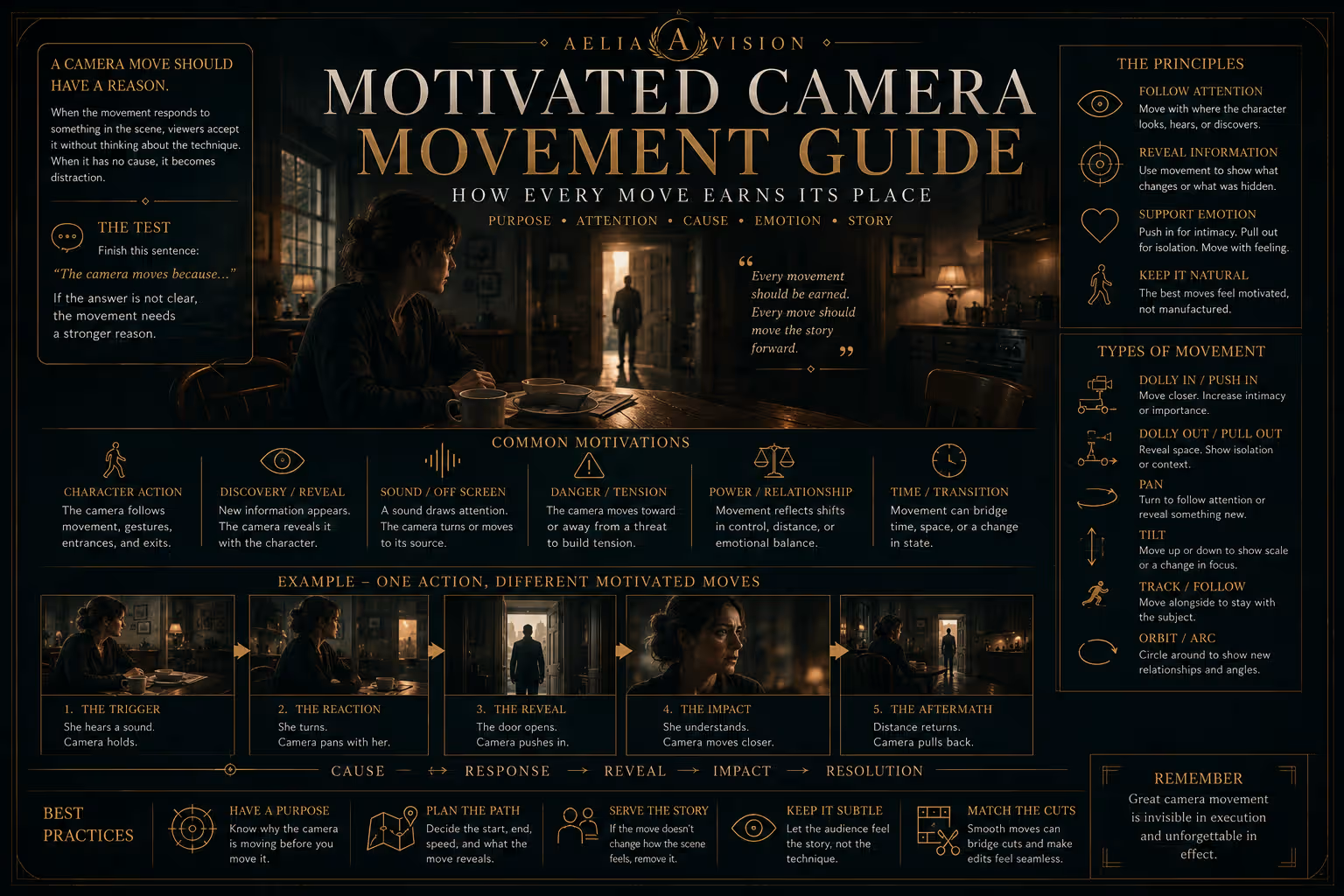
Camera movement should never be random. Movement becomes cinematic when it is motivated by story. The viewer should feel why the camera moves, even if they do not consciously notice it.
Locked-off camera
A locked-off camera does not move. It is useful for tension, stillness, realism, ritual, observation, emotional discomfort, and formal composition.
For example, a character waiting alone for a door to open can become more tense if the camera refuses to move. The stillness says, “There is no escape from this moment.”
AI prompt language:locked-off static frame, no camera drift, tension comes from performance and stillness
Slow push-in
A push-in moves the camera closer. It is useful for realization, emotional pressure, fear, discovery, internal change, and suspense.
For example, when a detective notices a clue, a slow push-in can make the truth feel like it is closing in.
AI prompt language:slow subtle dolly push-in over 5 seconds, motivated by realization, no sudden zoom, no camera orbit
Pull-back
A pull-back moves the camera away. It is useful for loneliness, loss, reveal, scale, emotional withdrawal, and tragic distance.
For example, a woman crying in a hospital corridor becomes more isolated as the camera slowly pulls back and the building grows around her.
AI prompt language:slow pull-back revealing the character small within the environment, emotional isolation, increasing negative space
Tracking shot
A tracking shot follows movement through space. It is useful for journey, pursuit, urgency, discovery, immersion, and momentum.
For example, a warrior walking through a burning village while the camera tracks beside him makes the audience move through the consequence with him.
AI prompt language:smooth side tracking shot, character remains in frame, environment passes in layered depth, no warping
Handheld movement
Handheld movement feels human and unstable. It is useful for panic, war, documentary realism, anxiety, chaos, and subjective fear.
However, handheld motion should still be controlled. If the camera becomes too chaotic, the audience may lose the subject and the emotion.
AI prompt language:restrained handheld camera, mild micro-shake, urgent realism, no chaotic warping, subject remains readable
Steadicam or gimbal movement
Steadicam-style movement is smooth but still human. It is useful for immersion, exploration, dreamlike movement, elegant tension, and following a character through space.
AI prompt language:smooth floating follow shot, stable but human, slow movement through space, subject centered
Crane or drone reveal
A crane or drone movement changes scale. It is useful for epic reveal, geography, discovery, spectacle, and emotional expansion.
For example, the camera rising behind a character to reveal a massive hidden kingdom tells the audience, “The world is larger than we knew.”
AI prompt language:slow crane up and back, revealing massive environment, character remains foreground anchor, epic scale
Depth: foreground, midground, and background
Cinematic images often feel dimensional because they are layered. The basic structure is foreground, midground, and background.
The foreground is closest to the camera and can include door frames, windows, curtains, hands, weapons, tables, smoke, rain on glass, blurred objects, or shadows. Foreground elements create immersion, depth, and sometimes a feeling of observation.
The midground usually contains the main subject and the central emotional action. This is where the audience’s attention often rests.
The background provides context, scale, and story information. It may show a city, crowd, battlefield, hallway, window, symbolic object, or hidden threat.
For example, a character sitting in the foreground while a burning city glows through the window behind them connects a personal emotional moment to a larger disaster. Depth is not only about 3D space. Depth is about story layers.
AI prompt language:blurred foreground doorway framing the subject, subject placed in midground, background reveals burning city through window, layered cinematic depth
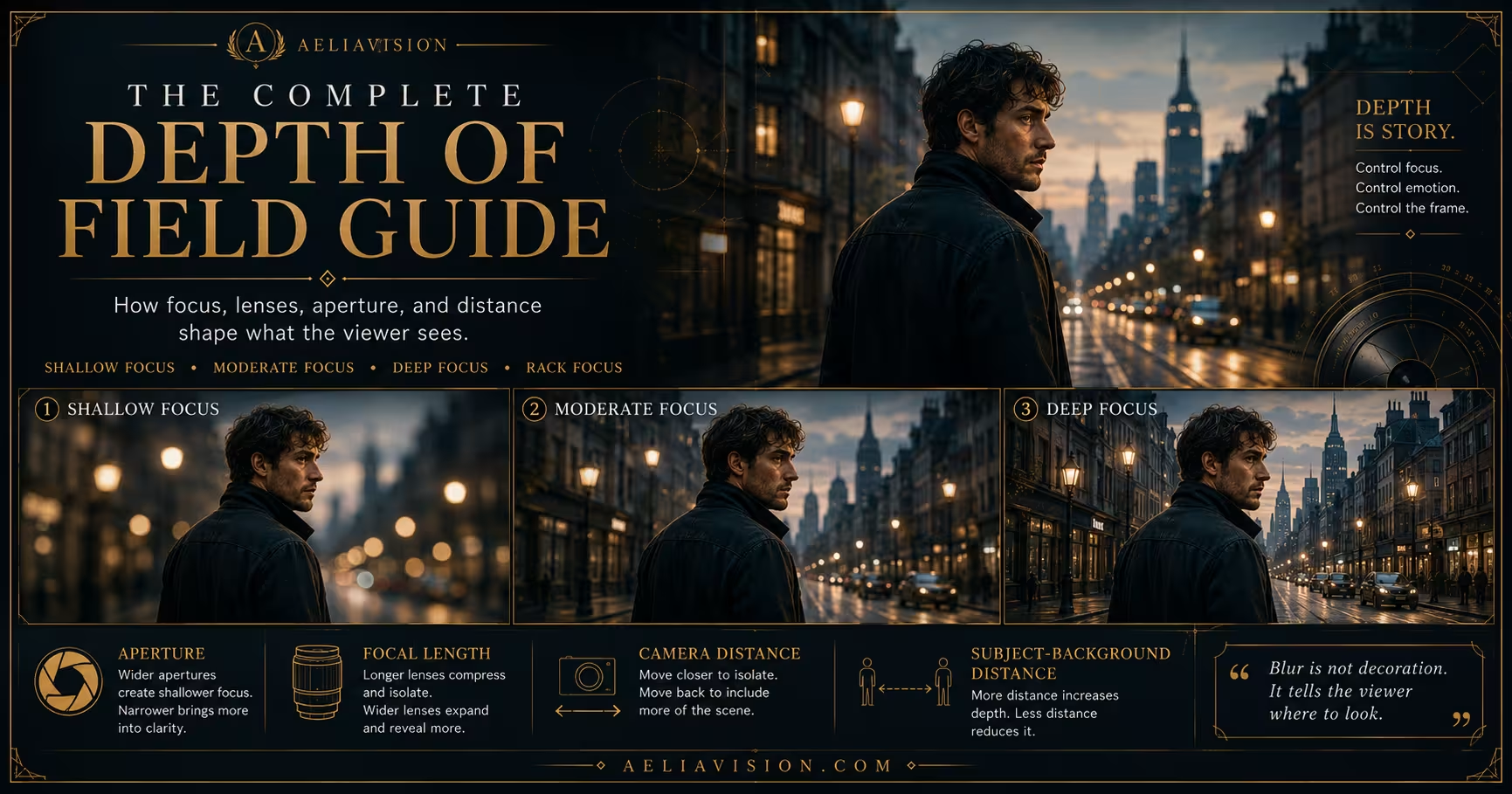
Focus: what the viewer is allowed to notice
Focus controls attention. What is sharp becomes important. What is soft becomes secondary, hidden, emotional, or atmospheric.
Shallow focus
Shallow focus isolates the subject. It is useful for emotion, intimacy, beauty, isolation, and subjective attention.
For example, a close-up of a character’s eyes while the background melts into softness tells the viewer, “Only this feeling matters.”
AI prompt language:shallow depth of field, eyes sharply focused, background softly blurred, emotional isolation
Deep focus
Deep focus keeps multiple planes sharp. It is useful for complex staging, suspense, power relationships, background information, and simultaneous action.
For example, a child playing in the foreground while danger appears clearly in the background creates tension because both story planes matter at once.
AI prompt language:deep focus, foreground and background both readable, layered suspense, multiple story planes visible
Rack focus
A rack focus shifts focus from one subject to another. It is useful for reveals, attention shifts, suspense, emotional turns, and object importance.
For example, focus beginning on a gun on the table and then shifting to a character’s eyes tells the viewer that the object and the emotion are connected.
AI prompt language:controlled rack focus from foreground object to character's eyes, smooth focus transition, no focus hunting
For AI video, focus behavior must be specified clearly. Otherwise, the model may blur the wrong subject or lose the emotional anchor.
Lighting as visual language
Lighting is not separate from camera language. It shapes what the frame means. The same angle can feel heroic, romantic, terrifying, tragic, or oppressive depending on the light.
Directional light
Directional light comes from a clear direction. It creates shape, shadow, and mood. A character lit from the side may feel mysterious because part of the face is hidden.
AI prompt language:strong side light from camera-left, half the face in shadow, mysterious emotional tone
Backlight
Backlight comes from behind the subject. It creates silhouette, separation, rim light, and atmosphere. A warrior standing before sunrise can become heroic through strong backlight and atmospheric haze.
AI prompt language:warm sunrise backlight, heroic silhouette, rim light around the figure, atmospheric haze
Top light
Top light comes from above. It can feel harsh, institutional, oppressive, interrogative, or spiritual.
AI prompt language:harsh overhead light, oppressive atmosphere, deep shadows under the eyes
Practical light
Practical light comes from visible sources inside the scene, such as lamps, candles, screens, fires, windows, or neon signs. Practical lighting makes the world feel believable because the light appears motivated by the environment.
AI prompt language:motivated practical light from phone screen, soft blue glow on face, dark surrounding room
Light and power
Light can reinforce hierarchy. A powerful character may be strongly lit while others remain in shadow. A vulnerable character may be partially hidden, underexposed, or swallowed by the room.
For example, a boss standing in warm window light while an employee sits in cold shadow creates emotional hierarchy without dialogue.
AI prompt language:dominant character in warm key light, subordinate character in cooler shadow, lighting reinforces power imbalance
Visual language by genre
Different genres use different visual dialects. The same camera tool can change meaning depending on the genre.
Drama
Drama often uses restrained visual language. Eye-level framing, natural lenses, soft directional light, controlled movement, emotionally motivated close-ups, realistic blocking, and natural color palettes help the viewer believe the human emotion.
AI prompt language:grounded drama visual language, eye-level camera, natural lens, restrained movement, soft realistic light
Horror
Horror often uses visual uncertainty. Negative space, off-center framing, high and low imbalances, obstructed foregrounds, slow movement, deep shadows, partial visibility, cold color palettes, and wide lenses in close spaces can make the audience search the frame and fear what is unseen.
AI prompt language:horror visual language, large negative space, obstructed foreground, cold shadows, slow creeping camera, partial visibility
Action
Action needs clarity plus energy. Wider lenses, strong blocking, readable geography, tracking movement, handheld intensity, dynamic composition, clear silhouettes, and controlled chaos help movement feel exciting without becoming confusing.
AI prompt language:action visual language, wide lens close to performer, clear geography, dynamic tracking movement, readable body motion
Epic and fantasy
Epic visual language often uses scale and ceremony. Wide shots, low angles, symmetry, crane reveals, atmospheric depth, massive environments, strong silhouettes, rich color palettes, and anamorphic framing can make the world feel mythic and emotionally large.
AI prompt language:epic fantasy visual language, wide anamorphic composition, massive scale, ceremonial blocking, atmospheric depth, heroic silhouette
Thriller
Thrillers use controlled tension. Observational framing, slow push-ins, long lenses, reflections, foreground obstructions, cool practical lighting, compressed space, and precise blocking can make the audience feel pressure and suspicion.
AI prompt language:thriller visual language, controlled composition, subtle push-in, foreground obstruction, compressed lens, suspicious atmosphere
Comedy
Comedy often needs clarity and timing. Wider two-shots, clear body language, less extreme shallow focus, stable framing, observational camera, readable reactions, and timing-friendly blocking help the audience see behavior and rhythm.
AI prompt language:comedy visual language, clear two-shot, readable body language, stable camera, natural timing, clean blocking
Genre reference table
| Genre | Visual Language | Main Goal |
|---|---|---|
| Drama | Eye level, natural lenses, restrained movement | Make emotion believable |
| Horror | Negative space, shadows, partial visibility | Make the audience fear the unseen |
| Action | Wide lenses, readable geography, movement | Make motion exciting and clear |
| Epic / Fantasy | Scale, symmetry, crane reveals, silhouettes | Make the world feel mythic |
| Thriller | Long lenses, reflections, compression | Create pressure and suspicion |
| Comedy | Stable framing, clear reactions, two-shots | Support timing and behavior |
Translating cinematic language into AI prompts
AI creators must prompt like cinematographers. A weak prompt describes style. A strong prompt describes visual language.
A weak prompt might say:
cinematic shot of a man in a room, dramatic lighting, 8K
This may produce something visually polished, but it gives the AI no real story direction. A stronger prompt defines the emotional beat, camera, lens, lighting, blocking, depth, and realism:
medium close-up of an exhausted father sitting alone at a kitchen table, eye-level camera, 50mm lens, face half-lit by cold refrigerator light from camera-left, unpaid bills blurred in the foreground, empty chair in the background, restrained composition, quiet domestic grief, shallow depth of field, natural skin texture, no glossy plastic look
The difference is intention. The stronger prompt does not only ask for something cinematic. It explains why the shot is cinematic.
The AI cinematic prompt formula
Use this formula when building cinematic prompts:
Story Beat + Emotion + Subject + Shot Size + Camera Angle + Lens + Blocking + Composition + Lighting + Depth + Focus + Movement + Realism + Negative Constraints
Here is a complete example:
A young queen stands alone on a palace balcony after hearing that her army has fallen, quiet shock and restrained grief, wide shot from behind, slight high angle to make her feel small, 35mm lens, placed on the left third of the frame with large negative space to the right, cold moonlight from above mixed with distant orange firelight from the burning city below, foreground stone railing, queen in midground, city smoke in background, realistic fabric weight, natural shadows, no fantasy glow, no plastic skin, no poster text.
This prompt works because every element serves the same emotional idea. The word “cinematic” is not doing the work; the visual treatment makes the queen vulnerable.
AI video prompting: movement and continuity
AI video requires even more control than AI images. A good still frame can be ruined by bad motion. Common AI video problems include random camera orbit, unmotivated zoom, face warping, clothing changes, background melting, eyeline mismatch, floating objects, broken scale, sudden lighting shifts, focus hunting, and characters drifting off-frame.
To prevent this, prompt the camera like a shot plan. Define the duration, camera movement, subject behavior, final beat, continuity rules, and negative constraints.
Example AI video motion prompt
5-second slow dolly push-in. The character remains seated and still. Only the eyes shift slightly toward the window in the final second. Preserve face identity, clothing, lighting direction, and background geometry. No camera orbit. No sudden zoom. No face warping. No extra limbs. No background melting. Keep the subject centered and sharp throughout.
This kind of prompt gives the model clear boundaries. The camera can move, but the world must remain coherent.
The cinematic visual language checklist
Before accepting an AI-generated image or video, review it like a director.
| Checklist Area | Question to Ask |
|---|---|
| Story | Can you describe the story beat in one sentence? |
| Emotion | Is the emotional intention clear? |
| Camera Angle | Does the angle support power, vulnerability, intimacy, or distance? |
| Shot Size | Is the audience at the right emotional distance? |
| Lens | Does the lens make space feel correct for the scene? |
| Blocking | Do character positions reveal relationships? |
| Eyelines | Do the eyes point toward the correct story target? |
| Composition | Does the frame guide the viewer’s eye? |
| Negative Space | Is empty space used with purpose? |
| Power Geometry | Who owns the frame, and is that visually clear? |
| Movement | Does the camera move for a story reason? |
| Depth | Are foreground, midground, and background intentional? |
| Focus | Is attention directed to the correct subject? |
| Lighting | Does the light support emotion and hierarchy? |
| Realism | Do anatomy, scale, shadows, fabric, reflections, and materials feel believable? |
| AI Stability | For video, does the subject stay consistent across motion? |
If the answer is weak, revise the prompt. Cinematic quality comes from correction, not only generation.
Common mistakes in cinematic visual language
Mistake 1: using “cinematic” as a shortcut
The word “cinematic” is not enough. You must define the visual language.
Instead of writing:
cinematic warrior
Write:
low-angle medium shot of a wounded warrior standing in rain, 35mm lens, face half-lit by firelight, broken army banners behind him, controlled heroic sadness, realistic mud and armor scratches
Mistake 2: random lens choice
Do not use lens numbers as decoration. Choose lenses for emotional space. A wide lens emphasizes environment, intensity, distortion, and scale. A normal lens supports natural realism. A telephoto lens creates isolation, compression, distance, or beauty.
Mistake 3: camera movement without motivation
Random movement weakens the shot. A push-in should intensify. A pull-back should reveal or isolate. A tracking shot should follow action, journey, or discovery. A locked frame should create stillness, tension, or observation.
Mistake 4: weak blocking
If characters stand randomly, the scene loses meaning. Blocking should reveal relationship, power, distance, intimacy, conflict, or emotional refusal.
Mistake 5: too much detail everywhere
AI often fills every part of the frame. Cinema needs hierarchy. Tell the model what is important and what should remain secondary.
Mistake 6: no power geometry
If the frame does not show who has power, the scene may feel emotionally flat. Use size, height, light, position, eyeline, and focus to clarify dominance or vulnerability.
Mistake 7: overusing shallow depth of field
Blur is not automatically cinematic. Sometimes the background carries the story. Use shallow focus only when isolation or subjective attention is the point.
Mistake 8: fake lighting
If the lighting has no believable source, the scene feels artificial. Always define motivated light, whether it comes from a window, lamp, candle, fire, phone screen, streetlight, or moonlight.
Mistake 9: confused emotion
Do not mix too many emotional goals in one shot. A frame should usually have one dominant emotional direction. If the shot is about grief, support grief. If it is about power, support power. If it is about suspense, support suspense.
Mistake 10: ignoring continuity in AI video
For AI video, always define what must stay consistent: face, clothing, camera direction, light, background geometry, eyeline, object position, shot size, and movement speed.
Final lesson: cinematic language is intentional meaning
Cinematic visual language is not about making every shot beautiful. It is about making every shot meaningful.
The camera angle expresses power. The lens shapes space. The shot size controls emotional distance. The blocking reveals relationships. The eyeline guides attention. The composition directs the eye. The movement changes rhythm. The focus controls what matters. The light shapes emotion. The depth creates a world.
A frame becomes cinematic when all of these choices serve the story.
For AI cinematic creators, this is the master lesson: do not prompt only the appearance of cinema. Prompt the language of cinema.
Start with the story beat. Define the emotion. Choose the camera position. Choose the lens. Design the blocking. Control the frame. Motivate the movement. Shape the light. Protect realism. Constrain AI mistakes. Then review the result like a director.
When you can translate emotion into camera, lens, blocking, movement, lighting, focus, and power geometry, cinematic creation becomes repeatable.
That is the true power of cinematic visual language.
Continue reading
Further insights from the Journal
Have a story in mind?
Bring your next project into focus.
Tell us what you are creating and what you want the audience to feel.