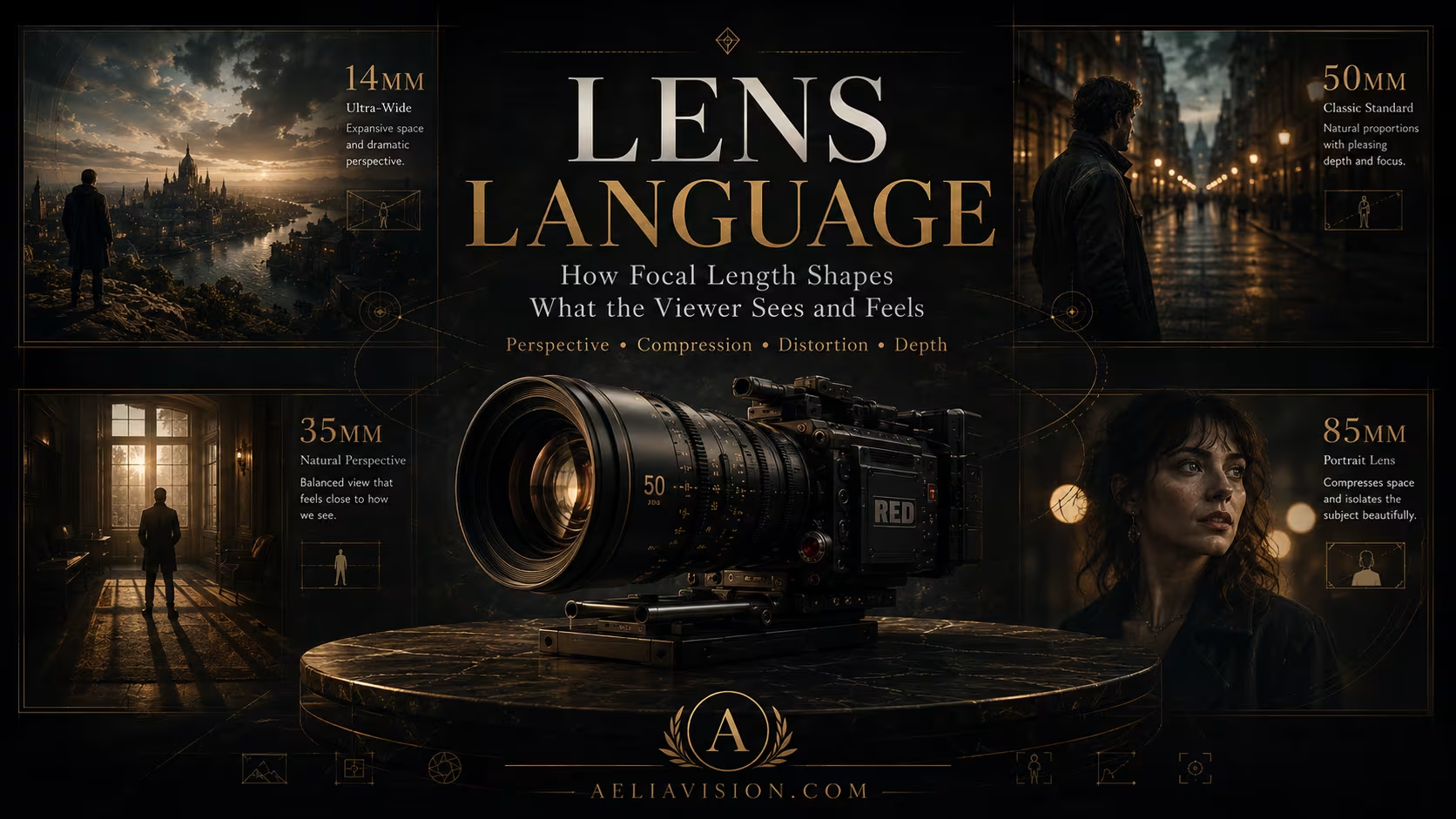
The story in brief
Learn how focal length, camera distance, and aperture shape perspective, compression, depth, and emotion in cinematography and AI filmmaking.
Inside this story
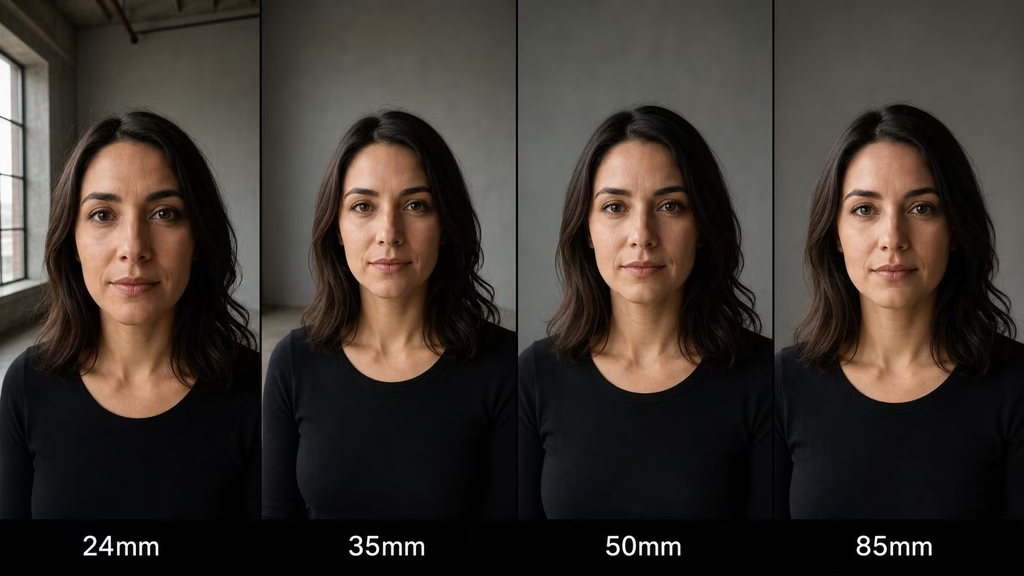
Frame a face from close range with a 14mm lens and nearby features appear exaggerated. Match that framing with an 85mm lens and you must move the camera farther back; the new camera position makes the face look flatter while the narrower view and depth of field simplify the background.
Same person. Same light. Different lens. The viewer sees two completely different images that communicate two completely different emotions.
Lens language is the way focal length, camera position, sensor format, aperture, and focus distance shape field of view, apparent compression, distortion, depth of field, and the relationship between subject and environment. In an AI prompt, lens terms ask the model to simulate those visual cues rather than reproduce a physical lens perfectly.
This guide explains what different focal lengths do, why those effects matter emotionally, and how to choose a lens deliberately instead of accepting a default look.
What focal length actually controls
Table of contents
Focal length is measured in millimeters. On a full-frame camera, 50mm often produces a natural-looking field of view, though human vision is not equivalent to a single lens. Shorter focal lengths show a wider field; longer focal lengths narrow and magnify it. Perspective changes when you move the camera to reframe the subject.
That’s the technical side. The creative side is what those differences do to space, relationships, and emotion.
Wide lenses (14mm-24mm): Show more environment, encourage close camera positions that exaggerate near-to-far scale, reveal edge distortion, and make movement toward or away from the camera feel pronounced.
Normal lenses (35mm-50mm): Offer a familiar-looking field of view, balanced subject-to-environment framing, and relatively restrained optical emphasis on a full-frame format.
Long lenses (85mm-200mm+): Narrow the field of view, often require greater camera distance, make backgrounds appear closer at matched framing, and can isolate a subject with shallow depth of field.
Lens choice contributes to whether a scene feels intimate, vast, claustrophobic, detached, immersive, or observational. Lighting, color, blocking, performance, and composition can reinforce or complicate that reading.
The wide-angle world: 14mm-24mm
Wide lenses create space. They show the subject in their environment instead of separating them from it. A character shot wide stays connected to their location. You see where they are and how they relate to it.
Wide lenses can also exaggerate near-to-far scale when the camera is close. A face framed from close range may show a prominent nose and receding ears. Filmmakers avoid that look when it is distracting and use it deliberately when the scene needs intimacy, unease, comedy, or energy.
The distortion can be a feature, not a bug. Horror films use wide lenses because that distortion makes faces look unsettling. Action films use wide lenses because they make movement feel faster and more dynamic. Music videos use wide lenses because the energy of the distortion matches the energy of the performance.
Wide lenses can create a sense of being in the space because they preserve environmental context and emphasize nearby movement. They are common in first-person POV, handheld documentary work, and scenes where immersion matters more than distant observation.
The other effect of wide lenses is depth exaggeration. A hallway shot wide looks much longer than it actually is. A room shot wide looks bigger. The distance between the foreground and background stretches. This can make a space feel vast and lonely or crowded and claustrophobic depending on how you compose it.
When to use wide lenses: Establishing shots, immersive POV, energetic action, intentionally distorted close work, confined spaces, and horror or tension that benefits from exaggerated depth.
When to reconsider a wide lens: Flattering portraiture, strong background separation, emotionally distant observation, or close dialogue where facial proportions need to remain restrained.
In AI prompts: “14mm wide-angle lens,” “24mm lens,” “wide-angle perspective,” “shot with ultra-wide lens,” “natural wide-angle distortion at edges.”
The normal range: 35mm-50mm
This range often feels visually restrained. A 50mm lens on full frame, or roughly 35mm on many APS-C cameras, gives a familiar field of view without the obvious spatial emphasis of an ultra-wide or long telephoto. Camera position and lens design still affect the result.
That neutrality is powerful. When you don’t want the lens to comment on the scene, you use a normal lens. Documentaries live here. Intimate dramas live here. Any film that wants to feel real and unmanipulated uses 35mm or 50mm as its default.
The normal range also balances subject and environment naturally. The viewer sees the person and where they are without favoring one over the other. A 50mm shot of someone in a room shows their face clearly and shows enough of the room to give context. Neither dominates.
Normal lenses are flexible enough for wide shots, medium shots, and closeups. At matched framing, a 50mm closeup usually places the camera closer than an 85mm, so facial perspective may feel a little more immediate without the stronger exaggeration of a close 24mm shot.
The trade-off is that normal lenses don’t add energy or style on their own. A 50mm shot can be beautiful, but the beauty comes from lighting, composition, and performance, not from the lens. If you want optical character, you need to go wider or longer.
When to use normal lenses: Documentary-style realism, balanced dialogue, restrained visual treatment, or general-purpose coverage without an obvious wide or telephoto effect.
When to choose another range: Strong optical energy, pronounced subject isolation, more distant portrait perspective, or an establishing shot that needs a much wider field of view.
In AI prompts: “35mm lens,” “50mm lens,” “normal perspective,” “natural field of view,” “neutral lens, no distortion.”
The portrait range: 85mm-135mm
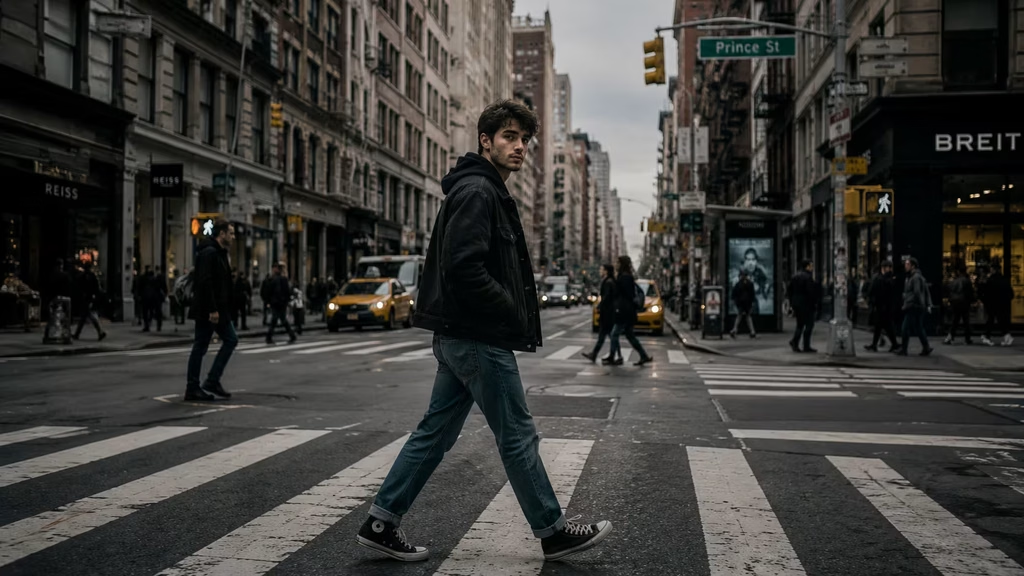
Long lenses compress space. The background appears much closer to the subject than it actually is. A person photographed with an 85mm lens looks like they’re standing right in front of a wall that’s actually 20 feet behind them. That compression separates the subject from the environment in a way wide and normal lenses can’t.
Long lenses are often paired with wide apertures and greater subject-to-background distance to create soft background blur. That separation can direct attention to the subject, but focal length alone does not determine bokeh or depth of field.
For the same head-and-shoulders framing, an 85mm lens places the camera farther away than a 35mm. That increased distance reduces near-to-far differences across the face, which many portrait photographers find flattering.
Long lenses also create emotional distance. The viewer observes rather than participates. A character shot with a 135mm lens feels farther away even if their face fills the frame. This makes long lenses good for observational moments, surveillance, or scenes where the viewer should feel like an outsider looking in.
The trade-off is that long lenses show less environment. A telephoto shot isolates the subject so completely that you lose spatial context. You know what the person looks like, but you might not know where they are or what’s around them.
When to use long lenses: Portraits, subject isolation, shallow-focus compositions, observational or surveillance perspectives, crowded backgrounds, and moments centered on facial expression.
When to reconsider a long lens: Wide establishing views, immersive POV, tight locations without enough camera distance, equal subject-and-environment emphasis, or movement that needs pronounced depth change.
In AI prompts: “85mm lens,” “135mm telephoto,” “portrait lens,” “compressed perspective,” “shallow depth of field, telephoto compression.”
Extreme focal lengths: below 14mm and above 135mm
These are specialty lenses that create strong optical effects.
Ultra-wide (8mm-14mm): Fish-eye distortion. Bending lines. Extreme perspective. These lenses make the world feel surreal or overwhelming. Action cameras use them. POV sports use them. Experimental films use them. They’re too distorted for most narrative work, but they’re perfect when you want the lens itself to become part of the style.
Super-telephoto (200mm+): Maximum compression. Almost flat space. Backgrounds that feel right on top of the subject. These lenses create a voyeuristic, detached, or surveillance perspective. They’re used for wildlife, sports, and any scene where the camera needs to be far away physically but close visually.
In AI prompts: “8mm fisheye,” “ultra-wide distortion,” “200mm telephoto,” “extreme compression,” “super telephoto lens.”
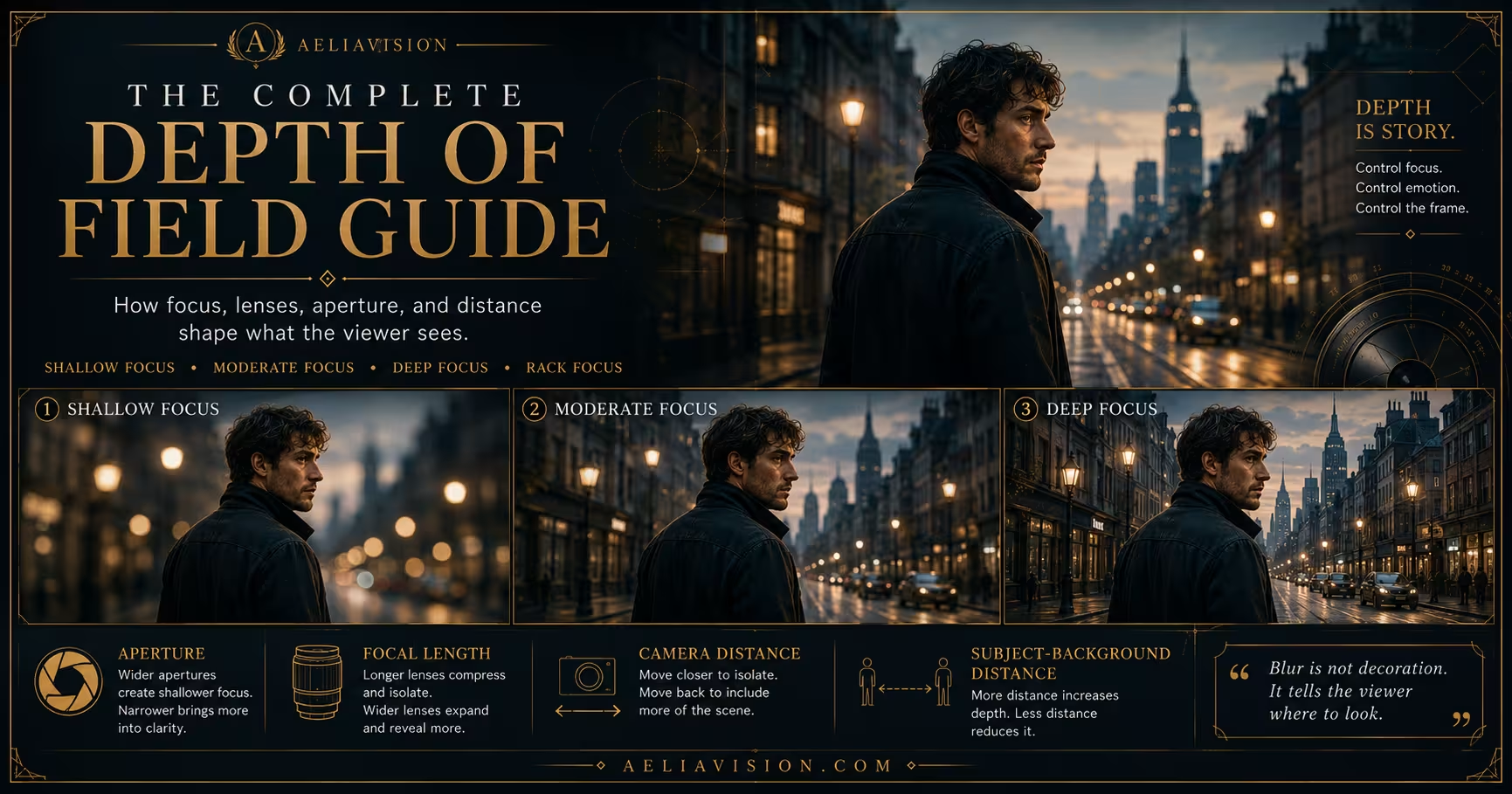
Lens choice and depth of field
Lens choice and depth of field are connected but not the same thing.
At the same camera position, focus distance, aperture, and sensor format, a wider lens generally shows greater depth of field than a longer lens. At matched framing, however, moving the camera changes the comparison. Subject distance, aperture, sensor size, focus distance, and background distance all matter.
For stronger background separation, combine a suitable focal length with a wide aperture and enough distance between subject and background. For deeper focus, stop down, use a wider lens when appropriate, and plan the focus distance.
Many AI models associate “85mm, f/1.8” with shallow focus and “24mm, f/8” with deeper focus, but the simulation is not physically reliable. Describe the desired result as well: “soft background separation” or “foreground-to-background sharpness.”
Lens language in different genres
Different genres have lens conventions.
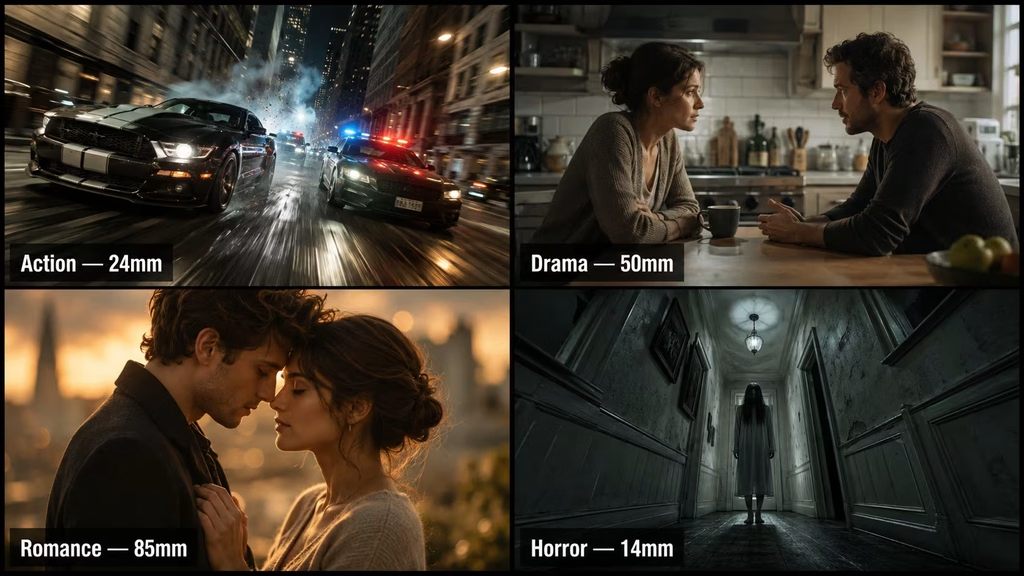
Action films use wide lenses for fight scenes and vehicle sequences. The distortion and depth exaggeration make movement feel faster and more intense.
Dramas use normal and portrait lenses (35mm-85mm). The natural perspective keeps the focus on performance and emotion rather than optical effects.
Horror films use wide lenses for POV and environmental shots (to create unease through distortion) and telephoto lenses for observation and surveillance (to make the viewer feel like they’re watching from a distance).
Westerns use medium-wide to normal lenses (28mm-50mm) to show characters in their landscape without losing them or the environment.
Romantic films use portrait lenses (50mm-85mm) to flatter faces and create separation from distracting backgrounds.
Commercials use everything depending on the product. Cars get wide lenses (to emphasize speed and space). Luxury products get long lenses (to isolate and flatter). Food gets macro lenses (a specialized type of lens for extreme closeups).
Knowing your genre’s conventions helps you either match them or break them deliberately.
Mixing lenses within a scene
A film can use a consistent lens family without assigning one focal length to every shot. Change lenses when the composition, location, or emotional beat gives you a reason.
A dialogue scene might start on a wide shot (24mm) to establish where the characters are, cut to medium shots (50mm) for the conversation, and move to closeups (85mm) when emotion peaks. Each lens serves the moment.
The key is having a reason for each change. If you start a scene wide, stay wide until something changes emotionally or spatially that justifies a different lens. If you cut from wide to long to wide to normal randomly, the viewer feels the inconsistency even if they can’t name it.
In AI filmmaking, mixing lenses means generating different shots with different focal length specifications. Plan the lens per shot based on what emotional beat that shot needs to serve.
Lens and camera movement
Lens choice affects how movement reads.
A push-in shot with a wide lens creates dramatic depth changes. The foreground rushes past. The subject grows larger quickly. The movement feels aggressive and immersive.
A push-in with a long lens feels gentler. The compression means the sense of forward motion is subtler. The subject grows larger, but the background barely changes. The movement feels more observational.
A dolly shot (lateral camera movement) shows strong parallax with a wide lens. The foreground, midground, and background all move at visibly different speeds. With a long lens, parallax is minimal. Everything moves together, almost like a 2D slide.
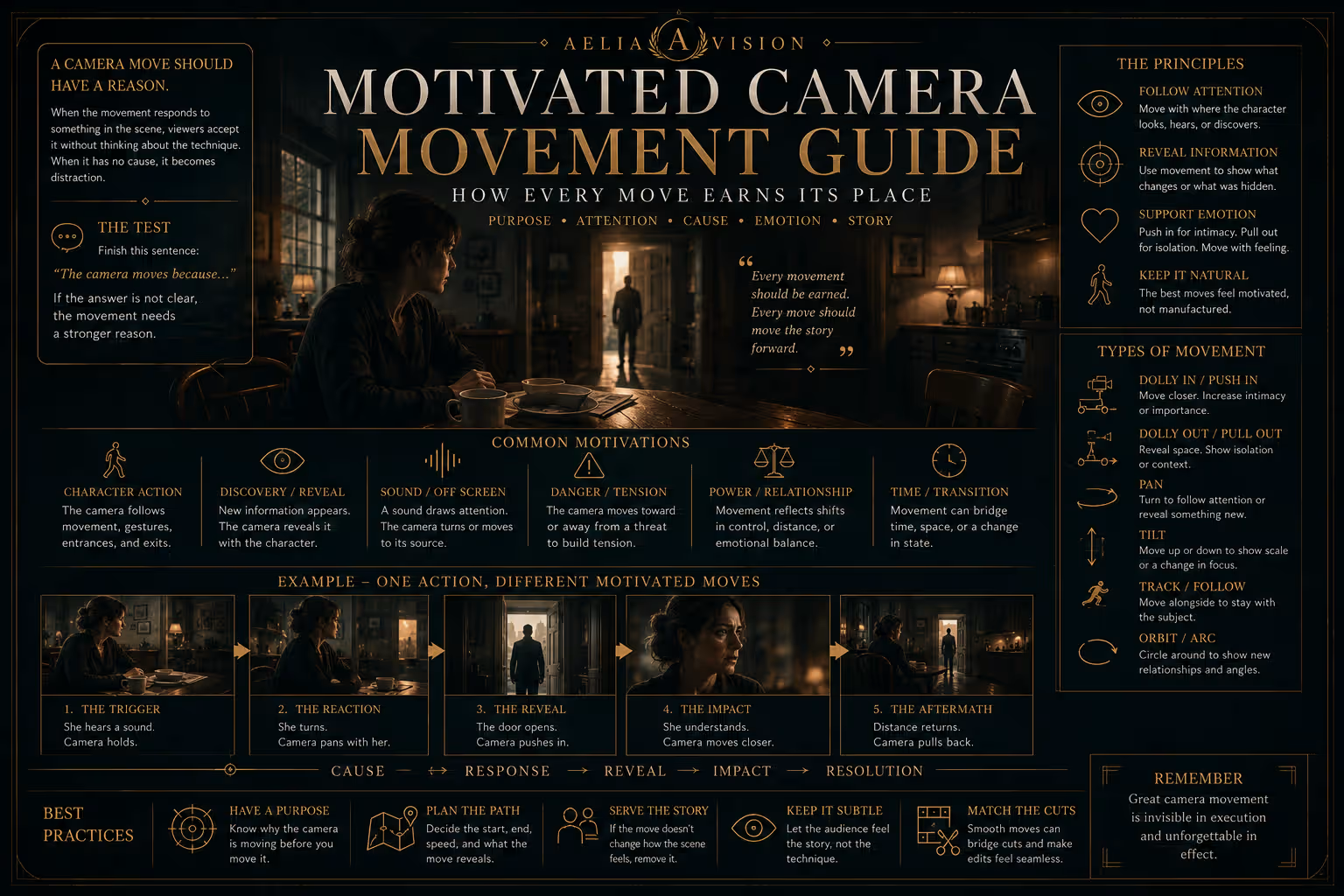
When planning camera movement for AI video, include the focal length and the desired parallax or depth change. The combination shapes how the move feels.
Common mistakes with lens choice
Using the same lens for everything. Each lens has a character. If every shot is 50mm, your film will feel optically neutral, which might be fine for a documentary but limiting for a narrative. Mix lenses to match emotional beats.
Using long lenses in small spaces. A telephoto may require more camera distance than the room allows, leading to cramped framing. Check the location before committing, then choose a wider focal length if needed.
Using wide lenses for closeups without intention. A close camera position can exaggerate facial features. Keep it when that immediacy serves the scene; otherwise move back and reframe with a longer lens.
Mixing lens perspectives randomly within a scene. If shot 1 is wide, shot 2 is long, shot 3 is normal, and shot 4 is ultra-wide, the scene feels visually chaotic. Pick a lens strategy for the scene and vary intentionally, not randomly.
Forgetting lens when writing AI prompts. If you don’t specify a lens, the AI model picks for you. Often that’s something neutral like 35mm-50mm. If your story needs the optical character of a different lens, you have to specify it.
How to specify lenses in AI prompts
Many AI models recognize common focal-length terms. Use these as starting points in a cinematic AI prompt and judge the generated geometry, not the label:
For specific lengths: “14mm lens,” “24mm lens,” “35mm lens,” “50mm lens,” “85mm portrait lens,” “135mm telephoto.”
For descriptive effects: “Wide-angle perspective,” “telephoto compression,” “natural lens perspective,” “distorted edges from wide lens,” “compressed background, shallow depth of field.”
For depth of field: “Shot with 85mm at f/1.8, shallow depth of field,” “24mm at f/8, deep focus, everything sharp.”
For specialized effects: “Fish-eye lens,” “ultra-wide distortion,” “macro lens extreme closeup,” “super telephoto surveillance perspective.”
Pair the lens term with the visible result you want: “85mm lens, f/2, shallow depth of field, distant background.” If the model ignores one cue, change one phrase at a time and compare the results.
Testing your lens choices
When you’re not sure what lens to use, ask:
1. Should the viewer see the subject in their environment or separated from it? Environment: use wide or normal. Separated: use long.
2. Should the viewer feel immersed or observing? Immersed: use wide. Observing: use long.
3. Does this moment need optical energy or optical neutrality? Energy: use wide or telephoto. Neutrality: use normal.
4. Should the subject’s face look distorted, natural, or flattered? Distorted: wide. Natural: normal. Flattered: portrait.
The lens is doing emotional and spatial work. Choose based on what work the shot needs to do.
Build a lens plan into your workflow
Treat lens choice as part of the project’s visual language. Define a small lens family and the situations that justify moving outside it.
A simple lens plan might reserve 24mm for environmental shots, 50mm for balanced dialogue, and 85mm for more isolated closeups. Treat those as working rules, not automatic choices, and note exceptions in the shot list.
In storyboarding, note the lens on every panel. A storyboard that just shows composition without lens information is incomplete. The lens determines how that composition will feel when generated.
Choose focal length with a reason
Lens choice works with camera position to shape field of view, apparent depth, distortion, and emotional distance. In AI generation, lens terms are useful visual instructions, but the output still needs to be checked against the intended shot.
Wide lenses immerse and distort. Normal lenses observe honestly. Long lenses isolate and flatter. Each has uses and each has limits.
Choose lenses deliberately. Use wide when you want environment and energy. Use normal when you want honesty and neutrality. Use long when you want separation and beauty. Mix them within a film to match the emotional arc of each scene.
Choose the focal length deliberately. If the generated perspective, background scale, or depth of field does not support the scene, revise the prompt or regenerate instead of accepting an accidental look.
Continue learning
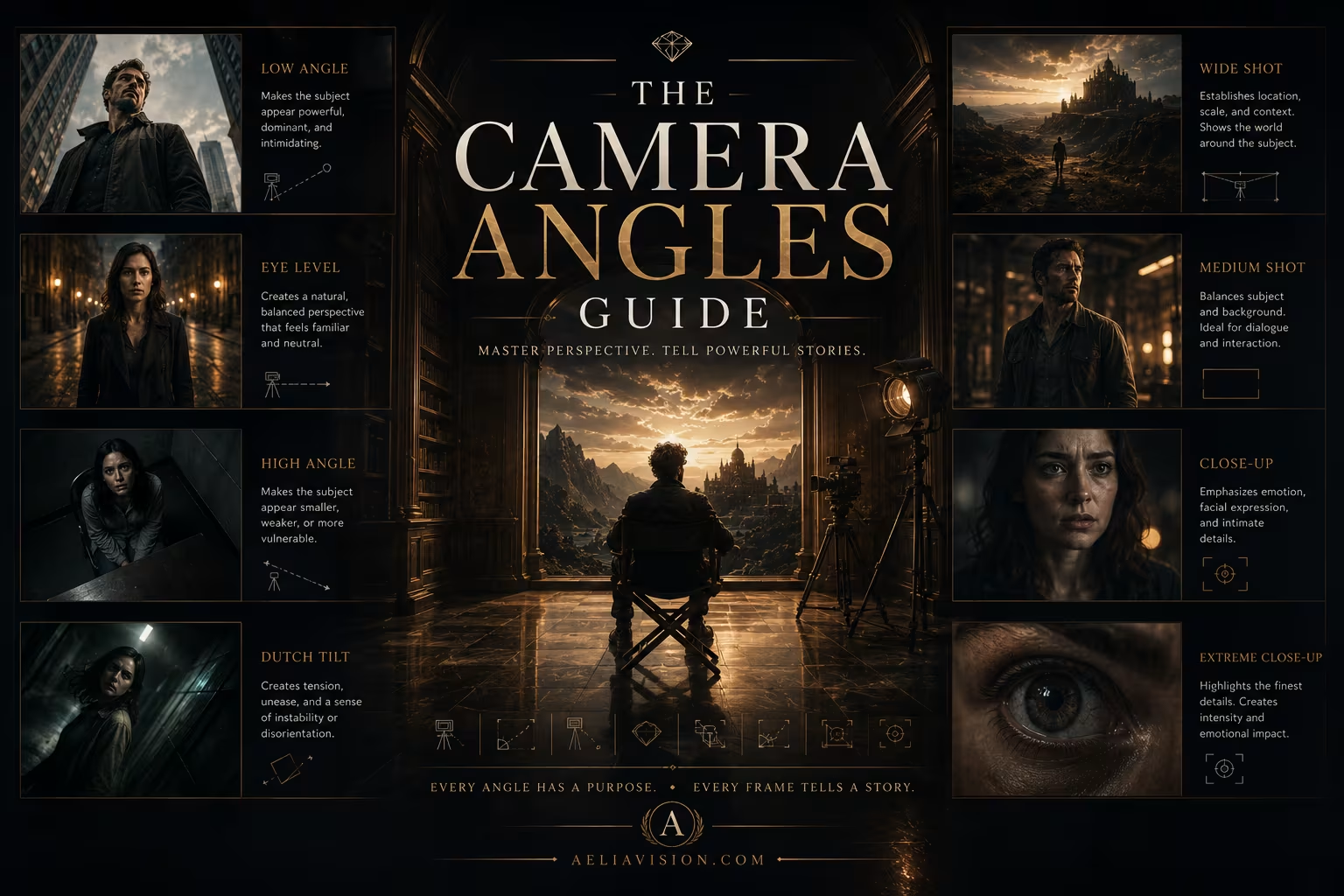
Camera angles, 14mm lens guide, 35mm lens guide, camera movement, and cinematic visual language.
A practical lens checklist
Before the shot: record sensor format, focal length, camera distance, aperture, focus distance, subject-to-background distance, and movement. After generation: check facial perspective, background scale, edge distortion, depth of field, and continuity with adjacent shots.
Continue reading
Further insights from the Journal
Have a story in mind?
Bring your next project into focus.
Tell us what you are creating and what you want the audience to feel.