The story in brief
Learn how a 35mm lens balances subject and environment, how camera distance changes perspective, and how to use it in filmmaking and AI prompts.
Inside this story
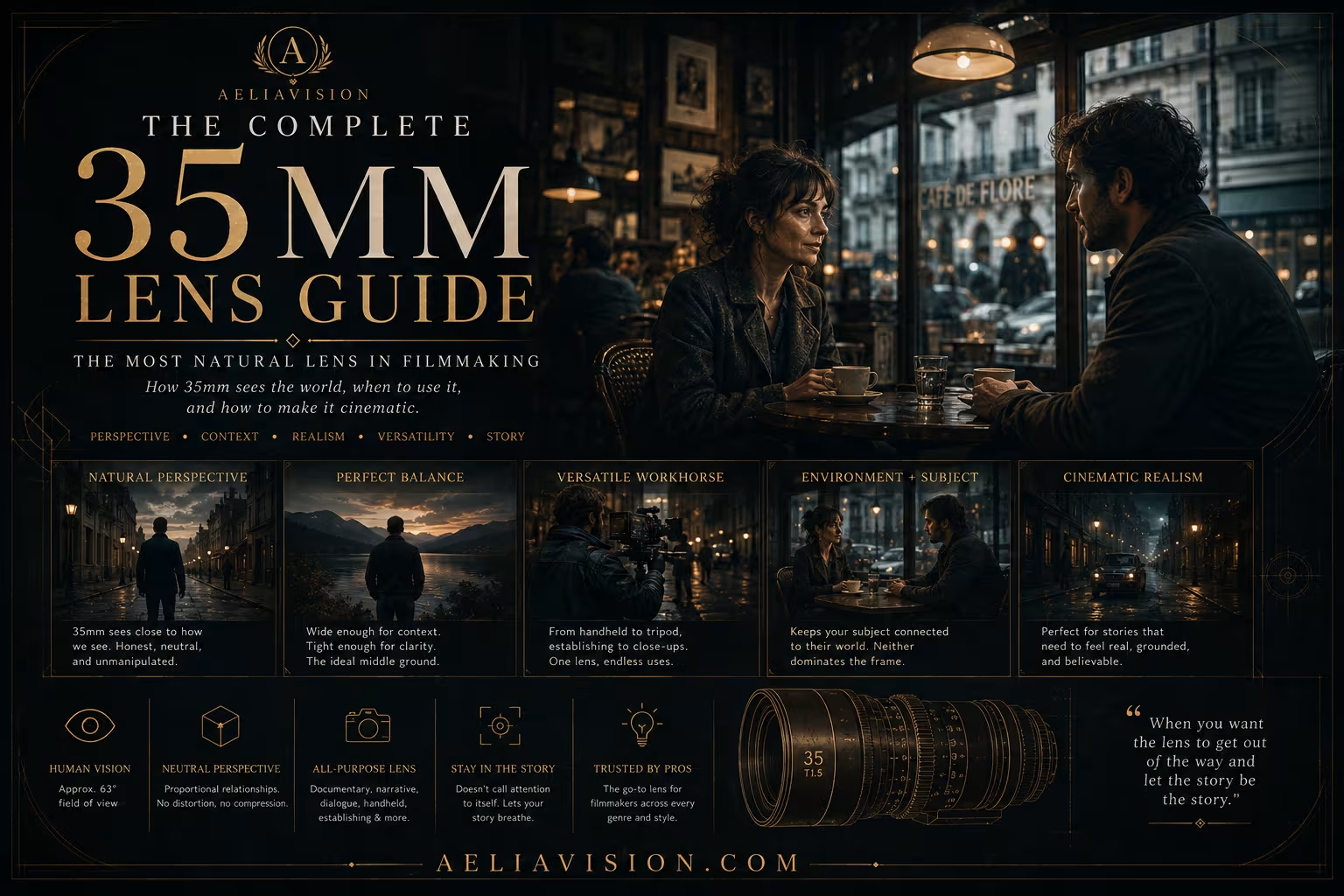
On a full-frame camera, a 35mm lens offers a moderately wide field of view that often feels familiar without looking extreme. Human vision is not equivalent to one focal length, and perspective still depends on camera position, but 35mm can balance a clear subject with readable surroundings.
That balance makes 35mm a common narrative choice. It is wide enough for context and restrained enough to keep a subject present. Use it when the relationship between character and environment matters more than an obvious ultra-wide or telephoto effect.
What 35mm actually does
Table of contents
On a full-frame sensor, 35mm covers roughly 54 degrees horizontally and about 63 degrees diagonally. The exact field depends on the recording area and lens, but the result is moderately wide rather than ultra-wide.
The perspective comes from where the camera stands. With 35mm, filmmakers often work at distances that keep the subject connected to the room without the pronounced near-to-far scale of a close ultra-wide shot or the narrow view associated with distant telephoto framing.
The restraint is both a strength and a limitation. A 35mm frame still has optical character, but lighting, blocking, composition, camera height, and movement usually carry more of the visible style than an extreme focal-length effect.
When 35mm works best
Documentary and realism
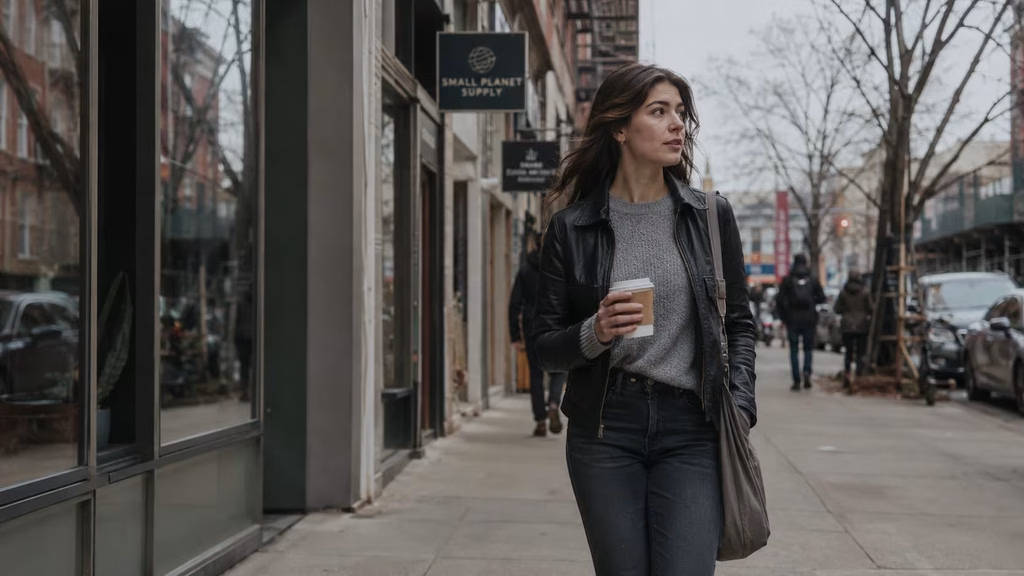
Documentary filmmakers often use 35mm because it can hold a person and their surroundings in one readable frame. The lens does not make an image objective, but its moderate field of view can support an observational style.
News, documentary features, and verite-style fiction may use this range when location context matters. Other focal lengths remain valid; the choice should follow access, framing, and editorial intent.
Establishing context
35mm shows subjects in their environment naturally. A character in a room shot at 35mm appears clearly while the room provides context. Neither dominates. The viewer sees who the person is and where they are without one element overwhelming the other.
This makes 35mm excellent for establishing shots that need to introduce both character and location. A 14mm might make the space feel too big. An 85mm might isolate the subject too much. A 35mm balances both.
Dialogue and conversation
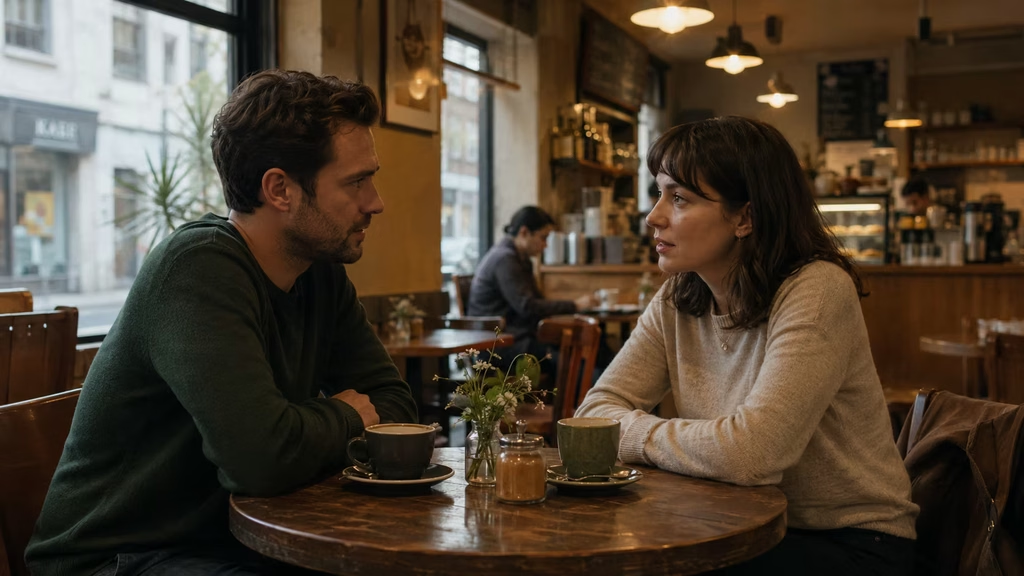
Two people talking shot at 35mm stay connected to the space they’re in. You see their faces clearly enough to read expressions, but you also see enough environment to understand their physical relationship and setting.
35mm dialogue feels grounded. The viewer isn’t watching faces float in a void (like they might with 85mm closeups). The space around the characters stays present and relevant.
Handheld and movement
35mm is forgiving for handheld work. It’s wide enough that small camera movements don’t turn into jarring shifts, but not so wide that the operator has to worry about distortion at the edges.
Walk-and-talk scenes, chase sequences, and any moment where the camera needs to move with the action benefits from 35mm’s combination of width and stability.
General purpose shooting
When the shot needs both subject and environment, 35mm is a useful starting point. It can cover wide, medium, and close framing, though a tight closeup requires careful camera distance and edge placement.
When another focal length fits better
Flattering portraits
A tight 35mm portrait usually places the camera closer than the same framing on 50mm or 85mm. That distance can exaggerate near facial features, while a farther camera position produces more restrained proportions.
For restrained facial perspective, move the camera back and choose the focal length that restores the intended framing. A 50mm or 85mm lens is a common starting point, not a universal requirement.
Isolation and bokeh
Background softness at 35mm depends on aperture, sensor format, subject distance, focus distance, and subject-to-background spacing. Compared at the same camera position and aperture, 35mm generally shows greater depth of field than a longer lens.
Strong background separation is possible at 35mm by moving close, opening the aperture, and increasing the subject-to-background distance. A longer lens can make that result easier at some framings, but it is not the only option.
Compression effects
Some shots need compressed space: a cityscape where buildings feel stacked, a crowd that looks dense, or a character framed tightly against a background that appears right behind them even though it’s far away.
Apparent compression comes from camera distance. Longer lenses make distant framing practical while keeping the subject large in frame, so use a longer focal length when the camera needs to move back and the background should appear closer.
Extreme wide coverage
Sometimes you need to show more of the environment than 35mm can capture. Small interior spaces, architectural photography, or establishing shots that need to show scope might need 24mm or wider.
35mm is wide, but it’s not ultra-wide. If the space matters more than the subject, go wider.
35mm versus 50mm
These two lenses are close enough that the choice often feels arbitrary. Here’s how to decide:
Use 35mm when:
- Environment matters as much as subject
- You’re shooting handheld or moving
- Space is tight
- You want more in the frame
- Documentary feel is the goal
Use 50mm when:
- Subject should take priority over environment
- You want a narrower field of view from the same camera position
- You want closer framing without moving physically closer
- The framing allows a greater camera distance for more restrained facial perspective
- Classic neutral look is the goal
Both are versatile. Both are neutral. 35mm leans slightly toward environmental storytelling. 50mm leans slightly toward subject isolation.
Depth of field at 35mm
At the same camera position, focus distance, aperture, and sensor format, 35mm generally gives more depth of field than a longer lens. At matched framing, moving the camera changes that comparison, so judge the complete setup rather than focal length alone.
That depth can be an advantage or a limitation depending on what you need.
Advantage: You can shoot wide open in low light and still keep multiple subjects at slightly different distances in acceptable focus. Useful for group shots and scenes where deep staging matters.
Limitation: With a distant subject or a nearby background, strong blur may be difficult. Move closer, increase background distance, or use a longer lens if the location and framing allow it.
For shallow depth of field, coordinate focal length, aperture, camera distance, and background distance. For deeper focus, stop down and plan the focus distance instead of assuming the lens will handle it alone.
35mm in different genres
Documentaries: The default. Neutral perspective, wide enough for environment, natural feel.
Indie dramas: Very common. 35mm gives intimate character work while keeping them grounded in real spaces.
Street photography style: The classic focal length for photojournalism translates directly to cinematic work.
Horror: Used for environmental shots and to keep the viewer aware of the space around characters (important for tension).
Action: Used for medium shots and moving sequences where wider lenses might be too distorted.
Westerns: Sometimes paired with 24mm and 50mm to keep characters connected to landscape without going ultra-wide.
Rom-coms: Used for establishing and dialogue, paired with 50mm-85mm for closeups.
Common mistakes with 35mm
Using it for every shot
A film can use 35mm throughout when that consistency serves the concept. If a scene needs a wider field, greater camera distance, or a different depth relationship, change focal length for a clear reason rather than variety alone.
Expecting it to flatter in closeups
A tight 35mm closeup of a face can look slightly unflattering, especially if the subject is very close to camera. The slight wide-angle perspective exaggerates anything that protrudes (nose, forehead) and minimizes anything that recedes (ears, sides of face). For flattering closeups, use 50mm or longer.
Not considering background busyness
Because 35mm keeps more in focus, backgrounds stay detailed. A cluttered background that would melt into bokeh at 85mm stays present and potentially distracting at 35mm. Pay attention to what’s behind your subject. Clean it up or reframe.
Forgetting about it entirely
Many filmmakers jump from 24mm to 50mm and skip 35mm entirely, treating it as a compromise focal length with no personality. But 35mm’s neutrality is its personality. When the story needs honesty and groundedness, 35mm is the right choice, not a compromise.

Combining 35mm with other lenses
Most films use 35mm as part of a lens set rather than in isolation. Common patterns:
Documentary style:
- 24mm for wide establishing
- 35mm for medium shots and general coverage
- 50mm for tighter singles
Indie drama:
- 35mm for dialogue and environment
- 85mm for emotional closeups
- 24mm for occasional wide perspective
Action:
- 16mm or 24mm for kinetic POV and stunts
- 35mm for medium action and moving shots
- 85mm for hero closeups
Commercial/Ad:
- 35mm for lifestyle and context
- 85mm or 100mm macro for product closeups
- 24mm for establishing environment
The 35mm can connect more stylized wide and long shots without becoming an automatic default.
Movement and 35mm
Camera movement feels natural at 35mm. The field of view is wide enough that small movements don’t create jarring frame shifts, but not so wide that movement becomes exaggerated.
Push-ins: A 35mm push-in toward a subject feels organic, like walking toward them. The gradual change in framing mimics how we naturally approach something we want to see closer.
Pull-outs: A 35mm pull-out reveals context naturally. As the camera backs away, more environment enters frame at a rate that feels observational rather than dramatic.
Dollies and tracking: Lateral movement at 35mm creates moderate parallax, enough to show depth and dimension, but not so much that layers separate dramatically. The background moves at a rate that feels natural.
Handheld: 35mm is forgiving for handheld because it’s wide enough to keep subjects in frame during small movements, but not so wide that every wobble feels magnified.
Prompting 35mm in AI generation
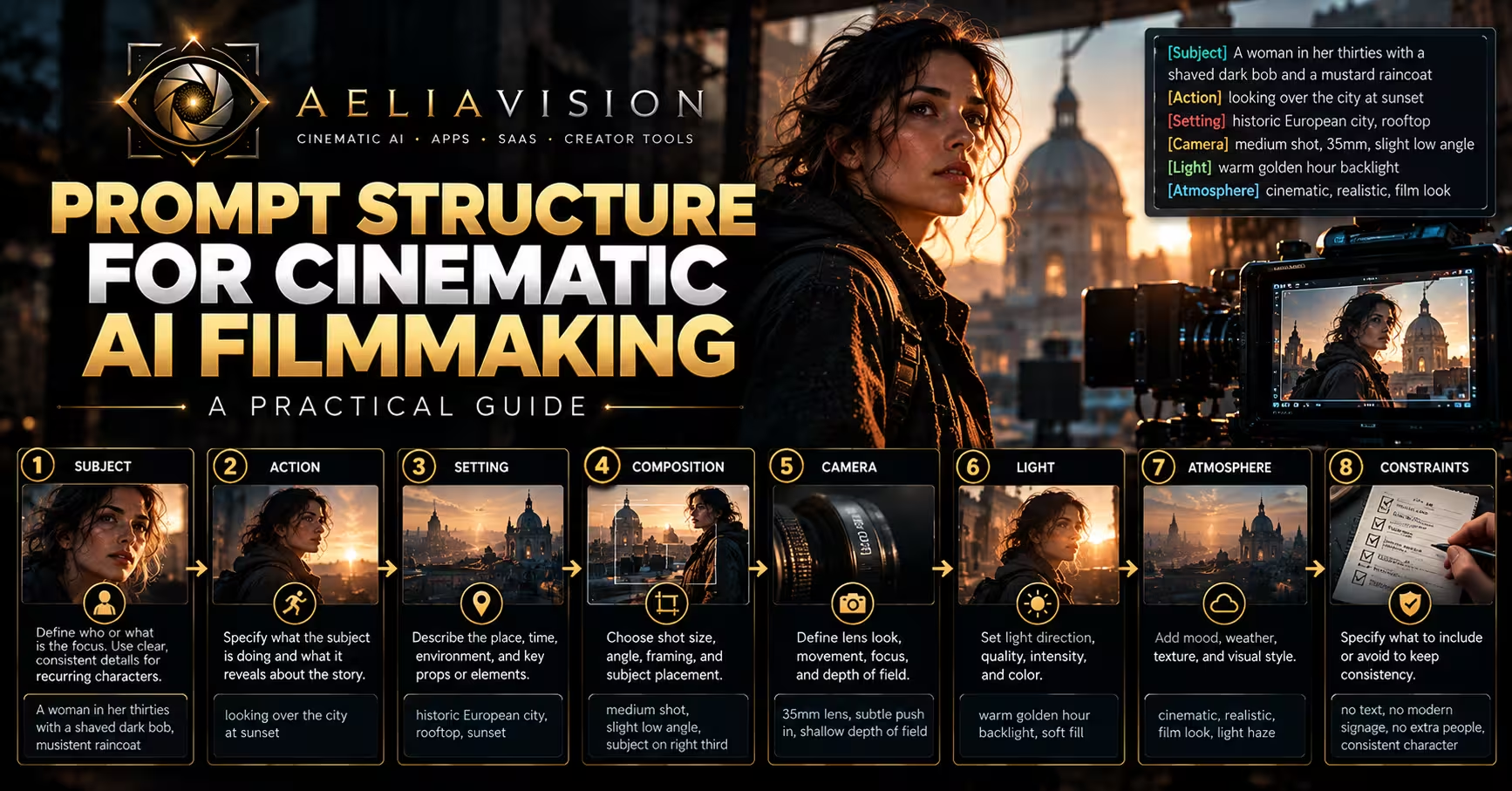
Many AI models recognize “35mm lens” as a visual cue. Use it as one part of a cinematic AI prompt, then check the actual perspective and framing:
For documentary-style shots: “35mm lens, natural perspective, balanced subject and environment, documentary realism, neutral field of view”
For dialogue scenes: “35mm lens, two people in conversation, both visible with environmental context, natural spatial relationships, moderate depth of field”
For establishing shots: “35mm lens establishing shot, character in environment, balanced framing, neither element dominates, honest perspective”
For movement: “35mm handheld follow shot, natural camera movement, subject walking through space, documentary style”
Describe the visible focus result as well as the aperture: a readable but softened background, or deep focus from foreground to background. AI models may associate f-numbers with these looks without simulating them physically.
Testing your 35mm shots
Ask these questions:
- Does this shot need to show both subject and environment equally?
If yes, 35mm works. If subject should dominate, use 50mm+. If environment should dominate, use 24mm or wider.
- Does the restrained field of view serve the story or flatten it?
If the scene needs optical personality, consider going wider or longer. If it needs honesty, 35mm is right.
- Is the background distracting because it is too sharp?
If yes, either clean up the background, reframe to simplify it, or switch to a longer lens that can blur it out.
- Would a greater camera distance improve this closeup?
If yes and flattery matters, change lenses. If honesty matters more than flattery, keep 35mm.
Build 35mm into the shot plan
If 35mm is the baseline, define its role in the project’s visual language. Record when the shot needs both subject and environment, and what justifies changing the focal length.
Write the lens, camera height, subject distance, framing, and focus plan into each shot. Those details make a 35mm setup repeatable across coverage and easier to match in AI generations.
When storyboarding, shots marked as 35mm should show natural proportions and balanced framing. The viewer should be able to see what the final image will look like without exaggeration in either direction.
Why 35mm matters in AI filmmaking
In traditional filmmaking, a 35mm lens may stay on the camera because it suits several framings. In AI filmmaking, adding the focal length can help steer the look, but the prompt should also describe camera distance, composition, depth of field, and movement.
35mm gives you:
- Natural perspective that doesn’t call attention to itself
- Balance between subject and environment
- Versatility across shot types
- Moderately wide geometry without an extreme lens effect
- A baseline to compare other lenses against
When planning a prompt, ask whether the shot needs more environment, greater camera distance, stronger edge emphasis, or tighter isolation. Use 35mm when its moderate field of view supports the answer.
The subtlety of 35mm
35mm doesn’t announce itself. A viewer watching your film won’t think “oh, that’s a 35mm shot” the way they might notice a fish-eye wide or a heavily compressed telephoto. The lens does its work quietly.
That subtlety is valuable. Not every shot needs to make a statement. Many shots just need to show what’s happening clearly and honestly. That’s what 35mm does.
Think of 35mm as the prose equivalent of clear, direct writing. It’s not flashy. It doesn’t draw attention to itself. But it communicates effectively and lets the content shine.
A practical 35mm workflow
Start with the scene, not the lens label. Write down what the audience needs to understand in the shot. Is the room important? Does the character need to feel part of it? Will another actor enter from the side? Those answers usually tell you whether 35mm is a useful starting point.
Then decide where the camera will stand. A 35mm lens changes character as you move closer or farther away. Move close for a more involving frame, but watch the face for perspective changes. Step back and let the room take on more weight. The lens stays the same; the relationship between camera and subject changes.
Next, check the edges. A 35mm frame often includes doors, lamps, windows, and passing people that a tighter lens would hide. Those details can make a scene feel lived in, but they can also steal attention. Remove or reposition anything that competes with the subject.
After that, set the focus plan. At a moderate aperture, a 35mm lens gives you room for small focus errors, which helps when actors move. If the background needs to soften, move the subject farther from it before opening the aperture all the way. Separation comes from distance as much as from the f-stop.
For an AI prompt, keep the same order. Describe the subject and scene first, then state the 35mm perspective, framing distance, depth of field, and movement. For example:
“A tired musician sits at the edge of a rehearsal room while two bandmates pack equipment behind him. 35mm lens, natural perspective, medium-wide framing, moderate depth of field, soft window light from the left, quiet handheld camera at eye level.”
That prompt gives the model a situation to stage instead of a pile of camera terms. The lens supports the scene rather than replacing it.
Matching a 35mm shot across cuts
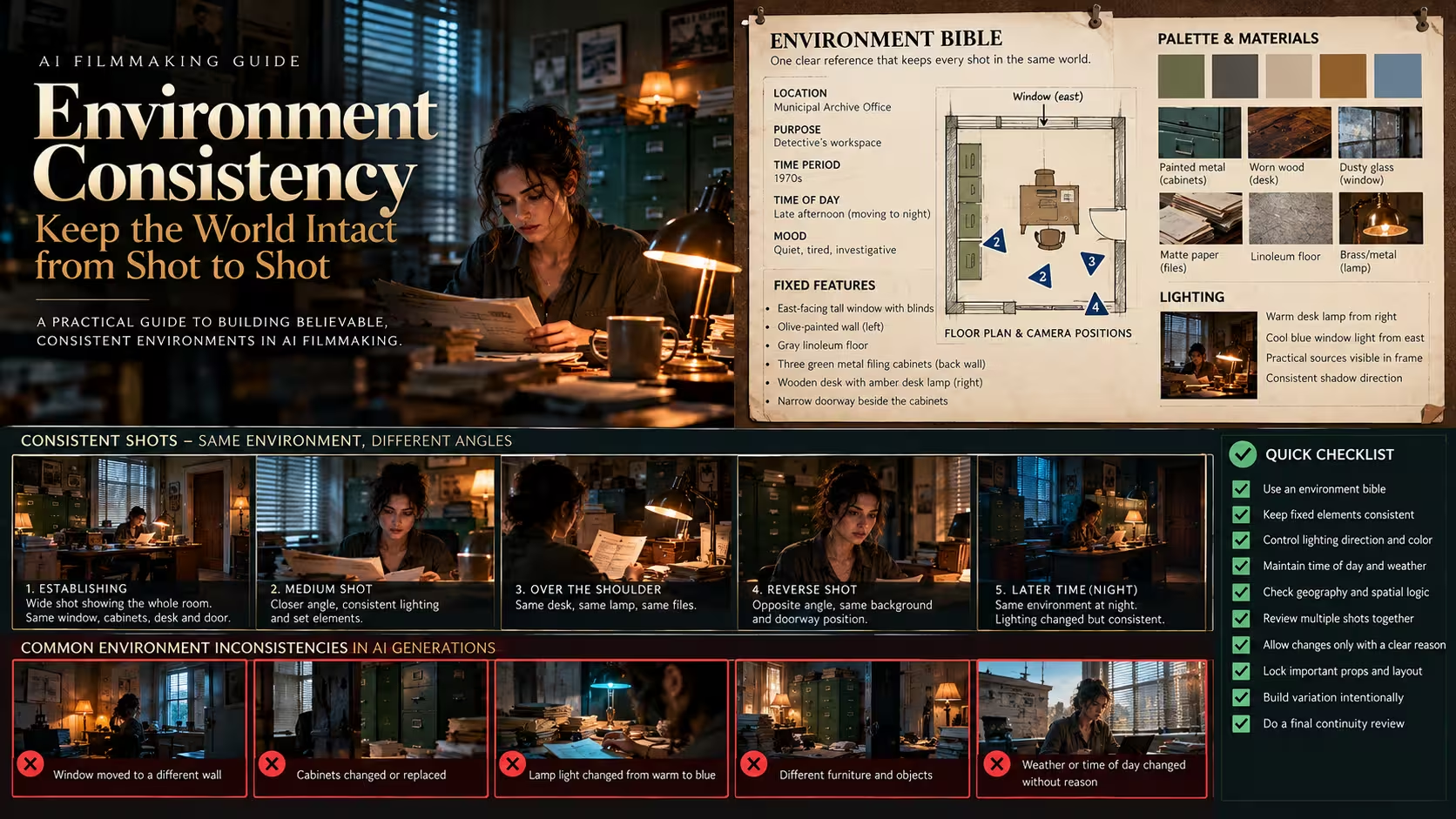
When you generate several shots for one scene, keep more than the focal length consistent. Match the camera height, subject distance, eyeline, light direction, and background arrangement. A 35mm closeup from a low camera position will not cut smoothly with a 35mm reverse shot made from eye level. The number on the lens is only one part of the geometry.
Use a reference frame when the environment matters. It helps preserve the room’s proportions and prevents each generation from inventing a new background. If the scene changes location, make that change in the story rather than allowing the model to drift between prompts.
In a dialogue scene, leave enough room for the reverse angle. Keep the two characters on a consistent axis, and give both sides similar camera height. You can still vary the shot size when the conversation changes emotionally, but the space should remain readable.
When a 35mm image feels too plain
Sometimes the lens is right and the frame still feels dull. The problem may be lighting, blocking, or a lack of foreground. Add a nearby object that creates depth, place the subject off center, or let a practical light motivate the composition. A small camera move can also give the frame a sense of life.
Do not solve every flat image by switching to an extreme lens. A 14mm lens can add energy, but it can also change the story. An 85mm lens can make a portrait beautiful, but it can remove the room that gives the scene meaning. Before changing lenses, ask what the frame is missing.
The answer may be a better subject position, a stronger background separation, or a more specific action. The 35mm lens can carry a great deal when the rest of the shot has something to say.
A short decision checklist
Use 35mm when the shot needs a clear subject, readable surroundings, and perspective that does not call attention to itself. It works especially well when the viewer should feel present in the same room rather than placed far away as an observer.
Choose something wider when the environment, distortion, or physical immersion matters more. Choose something longer when you need compression, facial flattery, or strong separation. 35mm remains a sensible first choice when the frame needs clarity, context, and an unforced point of view.
Continue learning:
- Lens language guide
- Camera movement guide
- Cinematic AI prompt guide
- 14mm lens guide
- Camera angles guide
- Cinematic visual language guide
- Practical check: compare camera distance and framing, not the focal-length label alone
- Keep subject, environment, and editorial intent visible in the frame
- Record camera height, subject distance, aperture, focus distance, and movement
- Match eyelines, background arrangement, light direction, and screen direction across cuts
Continue reading
Further insights from the Journal
Have a story in mind?
Bring your next project into focus.
Tell us what you are creating and what you want the audience to feel.